Topic 2: Functions of Language
Activity 4: Reading – Language and Meaning
Please read the following text which introduces you to the functions of language.
This activity contains text from 3.2: Functions of Language which is shared under a CC BY-NC-SA 3.0 license and was authored, remixed, and/or curated by Anonymous via source content that was edited to the style and standards of the LibreTexts platform. Minor changes for readability and to add illustrations as cited from other sources.
Learning Objectives
- Identify and discuss the four main types of linguistic expressions.
- Discuss the power of language to express our identities, affect our credibility, control others, and perform actions.
- Discuss some of the sources of fun within language.
- Explain how neologisms and slang contribute to the dynamic nature of language.
- Identify the ways in which language can separate people and bring them together.
What utterances make up our daily verbal communication? Some of our words convey meaning, some convey emotions, and some produce actions. Language also provides endless opportunities for fun because of its limitless, sometimes nonsensical, and always changing nature. In this section, we will learn about the five functions of language. These functions show us that language is expressive, powerful, fun, dynamic, and relational.
Language Is Expressive
Verbal communication helps us meet various needs through our ability to express ourselves. In terms of instrumental needs, we use verbal communication to ask questions that provide us with specific information. We also use verbal communication to describe things, people, and ideas. Verbal communication helps us inform, persuade, and entertain others, which — as we will learn more about later — are the three general purposes of public speaking. It is also through our verbal expressions that our personal relationships are formed. At its essence, language is expressive. Verbal expressions help us communicate our observations, thoughts, feelings, and needs (McKay et al., 1995, p. 34–36).
Expressing Observations
When we express observations, we report on the sensory information we are taking or have taken in. Eyewitness testimony is a good example of communicating observations. Witnesses are not supposed to make judgments or offer conclusions; they only communicate factual knowledge as they experienced it. For example, a witness could say, “I saw a white Mitsubishi Eclipse leaving my neighbour’s house at 10:30 pm.” As we learned in our readings about perception, observation and description occur in the first step of the perception-checking process. When you are trying to make sense of an experience, expressing observations in a descriptive rather than evaluative way can lessen defensiveness, which facilitates competent communication.
Expressing Thoughts
When we express thoughts, we draw conclusions based on what we have experienced. In the perception process, this is similar to the interpretation step. We take various observations and evaluate and interpret them to assign them meaning (a conclusion). Whereas our observations are based on sensory information (what we saw, what we read, what we heard), thoughts are connected to our beliefs (what we think is true/false), attitudes (what we like and dislike), and values (what we think is right/wrong or good/bad). Jury members are expected to express thoughts based on reported observations to help reach a conclusion about someone’s guilt or innocence. A juror might express the following thought: “The neighbour who saw the car leaving the night of the crime seemed credible. And the defendant seemed to have a shady past—I think he’s trying to hide something.” Sometimes people intentionally or unintentionally express thoughts as if they were feelings. For example, when people say, “I feel like you’re too strict with your attendance policy,” they aren’t really expressing a feeling; they are expressing a judgment about the other person (a thought).
Expressing Feelings
When we express feelings, we communicate our emotions. Expressing feelings is a difficult part of verbal communication, because there are many social norms about how, why, when, where, and to whom we express our emotions. Norms for emotional expression also vary based on nationality and other cultural identities and characteristics such as age and gender. In terms of age, young children are typically freer to express positive and negative emotions in public. Gendered elements intersect with age as boys grow older and are socialized into a norm of emotional restraint. Although individual men vary in the degree to which they are emotionally expressive, there is still a prevailing social norm that encourages and even expects women to be more emotionally expressive than men.

Some people are generally not good at or comfortable with receiving and processing other people’s feelings. Even those with good empathetic listening skills can be positively or negatively affected by others’ emotions. Expressions of anger can be especially difficult to manage because they represent a threat to the wellbeing and self-esteem of others. Despite the fact that expressing feelings is more complicated than other forms of expression, emotion sharing is an important part of how we create social bonds and empathize with others, and it can be improved.
In order to verbally express our emotions, it is important that we develop an emotional vocabulary. The more specific we can be when we are verbally communicating our emotions, the less ambiguous our emotions will be for the person decoding our message. As we expand our emotional vocabulary, we are able to convey the intensity of the emotion we’re feeling whether it is mild, moderate, or intense. For example, happy is mild, delighted is moderate, and ecstatic is intense; ignored is mild, rejected is moderate, and abandoned is intense (Hargie, 2011, p. 166).
In a time when so much of our communication is electronically mediated, it is likely that we will communicate emotions through the written word in an e-mail, text, or instant message. We may also still use pen and paper when sending someone a thank-you note, a birthday card, or a sympathy card. Communicating emotions through the written (or typed) word can have advantages such as time to compose your thoughts to appropriately convey the details of what you’re feeling. There are also disadvantages to the written word because elements of nonverbal communication cannot be included. Elements such as facial expressions and tone of voice offer insight into emotions that may not be expressed verbally. There is also a challenge with lack of immediate feedback. Sometimes people respond immediately to a text or e-mail, but think about how frustrating it is when you text someone and they don’t get back to you right away. If you’re in need of emotional support or want validation of an emotional message you just sent, waiting for a response could end up negatively affecting your emotional state.
Expressing Needs
When we express needs, we are communicating in an instrumental way to help us get things done. Given that we almost always know our own needs more than others do, it’s important for us to be able to convey those needs to others. Expressing needs can help us get a project done at work or help us navigate the changes of a long-term romantic partnership. Not expressing needs can lead to feelings of abandonment, frustration, or resentment. For example, if one romantic partner expresses that, “I think we’re moving too quickly in our relationship” but doesn’t also express a need, the other person in the relationship doesn’t have a guide for what to do in response to the expressed thought. Stating, “I need to spend some time with my hometown friends this weekend. Would you mind if I went home by myself?” would likely make the expression more effective. Be cautious of letting evaluations or judgments sneak into your expressions of need. Saying “I need you to stop suffocating me!” expresses a thought-feeling mixture more than it communicates a need.
Table 3.2.1: Types of Messages
(McKay et al., 1995, p. 34–36)
| Type | Description | Example |
|---|---|---|
| Observation | Report of sensory experiences or memories | “Pauline asked me to bring this file to you.” |
| Thought | Conclusion about or judgment of experiences and observations | “Students today have much less respect for authority.” |
| Feeling | Communicating emotions | “I feel at peace when we’re together.” |
| Need | Stating wants or requesting help or support | “I’m saving money for summer vacation. Is it OK if we skip our regular night out this week?” |
Adapted by TRU from 3.2: Functions of Language
Language Is Powerful
The contemporary American philosopher David Abram wrote, “Only if words are felt, bodily presences, like echoes or waterfalls, can we understand the power of spoken language to influence, alter, and transform the perceptual world” (Abram, 1997, p. 89). This statement encapsulates many of the powerful features of language. Next, we will discuss how language expresses our identities, affects our credibility, serves as a means of control, and performs actions.
Language Expresses Our Identities
In the opening to this unit, we addressed the complexities of etymology, or the history and background of words. Someone who enjoys this kind of study could think of themselves as a “word nerd.” Words or phrases can express who we are and contribute to the impressions that others make of us. We’ve already learned about identity needs, impression management, and how people use verbal communication strategically to create a desired impression. But how might the label word nerd affect one differently if someone else placed it on them?
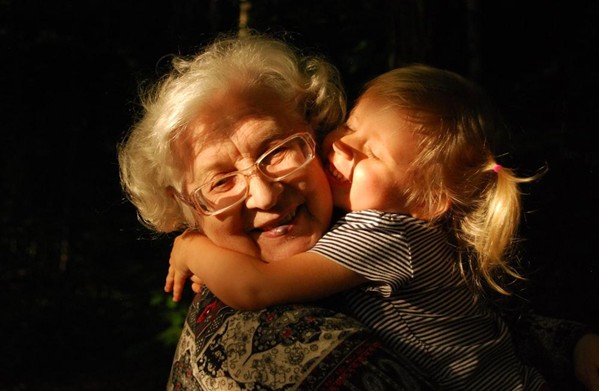
Telling people about your cultural and familial heritage or background may give them a sense of “who you are.”
The power of language to express our identities varies depending on the origin of the label (self-chosen or other imposed) and the context. People are usually comfortable with the language they use to describe their own identities but may have issues with the labels others place on them. In terms of context, many people express their “Irish” identity on St. Patrick’s Day, but they may not think much about it over the rest of the year. There are many examples of people who have taken a label that was imposed on them, one that usually has negative connotations, and intentionally used it in ways that counter previous meanings. Some country music singers and comedians have reclaimed the label “redneck,” using it as an identity marker they are proud of rather than a pejorative term. Other examples of people reclaiming identity labels are the “Black is beautiful” movement of the 1960s that repositioned Black as a positive identity marker for African Americans and the “queer” movement of the 1980s and ’90s that reclaimed queer as a positive identity marker for some gay, lesbian, bisexual, and transgender people. Even though some people embrace reclaimed words, sometimes these words still carry their negative connotations and are not openly accepted by everyone.
Activity 5: Personal Reflection Journal – Reflection Question 3
Please save your response in a separate file so you can refer to it later in the course.
Reflection Question 3:
This activity contains text from 3.2: Functions of Language which is shared under a CC BY-NC-SA 3.0 license and was authored, remixed, and/or curated by Anonymous via source content that was edited to the style and standards of the LibreTexts platform. Minor changes for readability and to add illustrations as cited from other sources.
Language Affects Our Credibility
One of the goals of this unit is to help you be more competent with your verbal communication. People make assumptions about your credibility based on how you speak and what you say. Even though we’ve learned that meaning is in people rather than words and that the rules that govern verbal communication, such as rules of grammar, are arbitrary, these norms still mean something. You don’t have to be a perfect grammarian to be perceived as credible. In fact, if you followed the grammar rules for written communication to the letter you would actually sound strange because our typical way of speaking isn’t as formal and structured as it is when we write. But you still have to support your ideas and explain the conclusions you make to be seen as competent. You have to use language clearly and be accountable for what you say in order to be seen as trustworthy. Using informal language and breaking social norms we’ve discussed so far wouldn’t enhance your credibility during a professional job interview, but it might with your friends at a tailgate party. Politicians know that the way they speak affects their credibility, but they also know that using words that are too scientific or academic can lead people to perceive them as stuffy, which would hurt their credibility. People in leadership positions need to be able to use language to put people at ease, relate to others, yet still appear confident and competent.
Language Is a Means of Control
Control is a word that often has negative connotations, but our use of “control” can be positive, neutral, or negative. For example, verbal communication can be used to reward or punish. We can offer verbal communication in the form of positive reinforcement to praise someone. We can withhold verbal communication or use it in a critical, aggressive, or hurtful way as a form of negative reinforcement. Directives are utterances that try to get another person to do something. They can range from a rather polite ask or request to a more forceful command or insist. Context informs when and how we express directives and how people respond to them. Promises are often paired with directives in order to persuade people to comply, and those promises, whether implied or stated, should be kept in order to be an ethical communicator. Keep this in mind to avoid arousing false expectations on the part of the other person (Hayakawa & Hayakawa, 1990, p. 67).
Rather than verbal communication being directed at one person as a means of control, the way we verbalize creates overall climates of communication that may control many people at the same time. Verbal communication characterized by empathy, understanding, respect, and honesty creates open climates that lead to more collaboration and more information exchange. Verbal communication that is controlling, deceitful, and vague creates a closed climate in which people are less willing to communicate and less trusting (Brown, 2006, p. 220). This concept is important when considering leadership positions, when one is in a position of respect, or if one is cultivating relationships or environments.
Language Is Performative
Some language is actually more like an action than a packet of information. Saying, “I promise,” “I guarantee,” or “I pledge,” does more than convey meaning; it communicates intent. Such utterances are called commissives, as they mean that a speaker is committed to a certain course of action (Crystal, 2005, p. 277). Of course, promises can be broken, and there can be consequences to breaking a promise. However, sometimes verbal communication is granted official power that can guarantee action. The two simple words I do can mean that a person has agreed to an oath before taking a witness stand or assuming the presidency. It can also mean that two people are now bound in a relationship recognized by the government and/or a religious community. These two words, if said in the right context and in front of the right person, such as a judge or a reverend, bring with them obligations that cannot be undone without additional steps and potential negative repercussions. In that sense, language is much more than “mere words.”

Judges’ words perform actions ranging from holding someone in contempt of court to sentencing someone to death.
Performative language can also be a means of control, especially in legal contexts. In some cases, the language that makes our laws is intentionally vague. In courts all over the world, written language intersects with spoken language as lawyers advocate for particular interpretations of the written law. The utterances of judges and juries set precedents for reasonable interpretations that will then help decide future cases. Imagine how powerful the words, “We the jury find the defendant…” seem to the defendant awaiting their verdict. The sentences handed down by judges following a verdict are also performative because those words impose fines, penalties, or even death. Some language is deemed so powerful that it is regulated. Hate speech, which we will learn more about later, and slander, libel, and defamation are considered powerful enough to actually do damage to a person and have therefore been criminalized.
Language Is Fun
Word games have long been popular. Before Wordle, there was Apples to Apples, Boggle, Scrabble, and crossword puzzles. Writers, poets, and comedians have built careers on their ability to have fun with language and in turn share that fun with others. The fun and frivolity of language becomes clear as teachers get half-hearted laughs from students when they make puns, Jay Leno has a whole bit where he shows the hilarious mistakes people unintentionally make when they employ language, and people vie to construct the longest palindromic sentence (a sentence that is the same letters backward and forward).
The productivity and limitlessness of language we discussed earlier leads some people to spend an inordinate amount of time discovering things about words. Two examples that many people find fascinating are palindromes and contranyms. Palindromes, as noted, are words that read the same from left to right and from right to left. Racecar is a commonly cited example, but a little time spent looking through Google results for palindromes exposes many more, ranging from “Live not on evil” to “Doc, note I dissent. A fast never prevents a fatness. I diet on cod” (Picciotto, n.d.). Contranyms are words that have multiple meanings, two of which are opposites. For example, sanction can mean “to allow” and “to prevent,” and dust can mean “to remove particles” when used in reference to furniture or “to add particles” when used in reference to a cake. These are just two examples of humorous and contradictory features of the English language—the book Crazy English by Richard Lederer explores dozens more. A fun aspect of language enjoyed by more people than a small community of word enthusiasts is humour.
There are more than one hundred theories of humour, but none of them quite captures the complex and often contradictory nature of what we find funny (Foot & McCreaddie, 2006, p. 295). Humour is a complicated social phenomenon that is largely based on the relationship between language and meaning. Humour functions to liven up conversations, break the ice, and increase group cohesion. We also use humour to test our compatibility with others when a deep conversation about certain topics like politics or religion would be awkward. Bringing up these topics in a lighthearted way can give us indirect information about another person’s beliefs, attitudes, and values. Based on their response to the humorous message, we can either probe further or change the subject and write it off as a poor attempt at humour (Foot & McCreaddie, 2006, p. 295). Using humour also draws attention to us, and the reactions that we get from others feeds into our self-concept. We also use humour to disclose information about ourselves that we might not feel comfortable revealing in a more straightforward way. Humour can also be used to express sexual interest or to cope with bad news or bad situations.
We first start to develop an understanding of humour as children when we realize that the words we use for objects are really arbitrary and can be manipulated. This manipulation creates a distortion or incongruous moment in the reality that we had previously known. Some humour scholars believe that this early word play—for example, calling a horse a turtle and a turtle a horse—leads us to appreciate language-based humour like puns and riddles (Foot & McCreaddie, 2006, p. 295). It is in the process of encoding and decoding that humour emerges. People use encoding to decide how and when to use humour, and people use decoding to make sense of humorous communication. Things can go wrong in both of those processes. I’m sure we can all relate to the experience of witnessing a poorly timed or executed joke (a problem with encoding) and of not getting a joke (a problem with decoding).

Comedians make a living by making language fun, but humour is contextual and not always easy to pull off.
Language Is Dynamic
Language is essentially limitless. We may create a one-of-a-kind sentence combining words in new ways and never know it. Aside from the endless structural possibilities, words change meaning, and new words are created daily. In this section, we’ll learn more about the dynamic nature of language by focusing on neologisms and slang.
Neologisms
Neologisms are newly coined or used words, or words that are just brought into linguistic existence. Newly used words make their way into languages in several ways, including borrowing and changing structure. Taking is actually a more fitting descriptor than borrowing, since we take words but don’t really give them back. In any case, borrowing is the primary means through which languages expand. English is a good case in point, as most of the English vocabulary is borrowed and doesn’t reflect the language’s Germanic origins. English has been called the “vacuum cleaner of languages” (Crystal, 2005, p. 277). Weekend is a popular English word based on the number of languages that have borrowed it. We have borrowed many words, like chic from French, karaoke from Japanese, and caravan from Arabic.
Structural changes also lead to new words. Compound words are neologisms that are created by joining two already known words. Keyboard, newspaper, and giftcard are all compound words that were formed when new things were created or conceived. We also create new words by adding something, subtracting something, or blending them together. For example, we can add affixes, meaning a prefix or a suffix, to a word. Affixing usually alters the original meaning but doesn’t completely change it. Ex-husband and kitchenette are relatively recent examples of such changes (Crystal, 2005, p. 277). New words are also formed when clipping a word like examination, which creates a new word, exam, that retains the same meaning. And last, we can form new words by blending old ones together. Words like breakfast and lunch blend letters and meaning to form a new word—brunch. A blended word is called a portmanteau.
Existing words also change in their use and meaning. The digital age has given rise to some interesting changes in word usage. Before Facebook, the word friend had many meanings, but it was mostly used as a noun referring to a companion. The sentence, I’ll friend you, wouldn’t have made sense to many people a few decades ago because friend wasn’t used as a verb. Google went from being a proper noun referring to the company to a more general verb that refers to searching for something on the Internet (perhaps not even using the Google search engine). Meanings can expand or contract without changing from a noun to a verb. Gay, an adjective for feeling happy, expanded to include gay as an adjective describing a person’s sexual orientation. Perhaps because of the confusion that this caused, the meaning of gay has contracted again, as the earlier meaning is now considered archaic, meaning it is no longer in common usage.
The American Dialect Society names an overall “Word of the Year” each year and selects winners in several more specific categories. The winning words are usually new words or words that recently took on new meaning (American Dialect Society, n.d.). The Oxford University Press word of the year in 2023 word of the year was “rizz,” meaning style, charm, or attractiveness. A short form of “charisma,” the word “rizz” did not even exist a few years ago! Although languages are dying out at an alarming rate, many languages are creating new words and expanded meanings, thanks largely to advances in technology.
Slang
Slang is a great example of the dynamic nature of language. Slang refers to new or adapted words that are specific to a group, context, and/or time period, regarded as less formal, and representative of people’s creative play with language. Research has shown that only about 10% of the slang terms that emerge over a fifteen-year period survive. Many more take their place though, as new slang words are created using inversion, reduction, or old-fashioned creativity (Allan & Burridge, 2006, p. 69–71). Inversion is a form of word play that produces slang words like sick, wicked, and bad that refer to the opposite of their typical meaning. Reduction creates slang words such as pic, sec, and later from picture, second, and see you later. New slang words often represent what is edgy, current, or simply relevant to the daily lives of a group of people. Many creative examples of slang refer to illegal or socially taboo topics like sex, drinking, and drugs. It makes sense that developing an alternative way to identify drugs or talk about taboo topics could make life easier for the people who partake in such activities. Slang allows people who are in “in the know” to break the code and presents a linguistic barrier for unwanted outsiders. Taking a moment to think about the amount of slang that refers to being intoxicated on drugs or alcohol or engaging in sexual activity should generate a lengthy list.
A look back at slang words even over the past 30 years is indicative of how language changes. The top slang word among university and college students in 1997 was da bomb, which means “great, awesome, or extremely cool,” and the top word for both 2001 and 2002 was tight, which was used as a generic positive meaning “attractive, nice, or cool.” In 2011, deuces was a popular word among postsecondary students, which was used when leaving as an alternative to good-bye and stems from another verbal/nonverbal leaving symbol—holding up two fingers for “peace” as if to say, “peace out.” In 2024, young people say “slay” when they mean “thanks,” “great,” “sounds good,” or “I agree.”
It can be difficult for students to identify the slang they use at any given moment because it is worked into our everyday language patterns and becomes very natural. Just as we learned here, new words can create a lot of buzz and become a part of common usage very quickly. The same can happen with new slang terms. Most slang words also disappear quickly, and their alternative meaning fades into obscurity. For example, you don’t hear anyone using the word macaroni to refer to something cool or fashionable. But that’s exactly what the common slang meaning of the word was at the time the song “Yankee Doodle” was written. Yankee Doodle isn’t saying the feather he sticks in his cap is a small, curved pasta shell; he is saying it’s cool or stylish.
Activity 6: Personal Reflection Journal – Reflection Question 4
Please read the following case study, then complete the reflection question. Please save your response in a separate file so you can refer to it later in the course.
“Getting Plugged In”: Is “Textese” Hurting Our Verbal Communication?
Textese, also called text-message-ese and txt talk, among other things, has been called a “new dialect” of English that mixes letters and numbers, abbreviates words, and drops vowels and punctuation to create concise words and statements. Although this “dialect” has primarily been relegated to the screens of smartphones and other text-capable devices, it has slowly been creeping into our spoken language (Huang, 2011).
Some critics say textese is “destroying” language by “pillaging punctuation” and “savaging our sentences” (Humphrys, 2007). A relatively straightforward tx for “thanks” or u for “you” has now given way to textese sentences like imho ur gr8. If you translated that to, “In my humble opinion, you are great,” then you are fluent in textese.
Although teachers and parents seem convinced that this type of communicating will eventually turn our language into emoticons and abbreviations, some scholars aren’t. David Crystal, a well-known language expert, says that such changes to the English language aren’t new and that texting can actually have positive effects. He points out that Shakespeare also abbreviated many words, played with the rules of language, and made up several thousand words — and he is not considered an abuser of language.
Crystal also cites research that found, using experimental data, that children who texted more scored higher on reading and vocabulary tests. In order to play with language, you must first have some understanding of the rules of language (Huang, 2011).
Reflection Question 4:
- What effects, if any, do you think textese has had on your non-text-message communication?
- Overall, do you think textese and other forms of computer-mediated communication have affected our communication? Try to identify one potential positive and negative influence that textese has had on your verbal communication.
This activity contains text from 3.2: Functions of Language which is shared under a CC BY-NC-SA 3.0 license and was authored, remixed, and/or curated by Anonymous via source content that was edited to the style and standards of the LibreTexts platform. Minor changes for readability, to add Canadian context, and to add illustrations as cited from other sources.
Language Is Relational
We use verbal communication to initiate, maintain, and terminate our interpersonal relationships. The first few exchanges with a potential romantic partner or friend help us size the other person up and figure out if we want to pursue a relationship or not. We then use verbal communication to remind others how we feel about them and to check in with them—engaging in relationship maintenance through language use. When negative feelings arrive and persist, or for many other reasons, we often use verbal communication to end a relationship.
Language Can Bring Us Together
Interpersonally, verbal communication is key to bringing people together and maintaining relationships. Whether intentionally or unintentionally, our use of words like I, you, we, our, and us affect our relationships. “We language” includes the words we, our, and us and can be used to promote a feeling of inclusiveness. “I language” can be useful when expressing thoughts, needs, and feelings because it leads us to “own” our expressions and avoid the tendency to mistakenly attribute the cause of our thoughts, needs, and feelings to others. Communicating emotions using “I language” may also facilitate emotion sharing by not making our conversational partner feel at fault or defensive. For example, instead of saying, “You’re making me crazy!” you could say, “I’m starting to feel really anxious because we can’t make a decision about this.” Conversely, “you language” can lead people to become defensive and feel attacked, which could be divisive and result in feelings of interpersonal separation.

Verbal communication brings people together and helps maintain satisfying relationships.
Aside from the specific words that we use, the frequency of communication impacts relationships. Of course, the content of what is said is important, but research shows that romantic partners who communicate frequently with each other and with mutual friends and family members experience less stress and uncertainty in their relationship and are more likely to stay together (McCornack, 2007, p. 237). When frequent communication combines with supportive messages — messages communicated in an open, honest, and nonconfrontational way — people are more likely to come together.
Moving from the interpersonal to the sociocultural level, we can see that speaking the same language can bring people together. When a person is surrounded by people who do not speak his or her native language, it can be very comforting to run into another person who speaks the same language. Even if the two people are strangers, the ease of linguistic compatibility is comforting and can quickly facilitate a social bond. We’ve already learned that language helps shape our social reality, so a common language leads to some similar perspectives. Of course, there are individual differences within a language community, but the power of shared language to unite people has led to universal language movements that advocate for one global language.
Serious attempts to create a common language, sometimes referred to as a lingua franca or auxiliary language, began in the 1600s as world exploration brought increased trade and Latin was no longer effective as the language of international business. Since then, hundreds of auxiliary languages have been recorded, but none have achieved widespread international usage or been officially recognized as an international language (Crystal, 2005, p. 277). While some such movements were primarily motivated by business and profit, others hoped to promote mutual understanding, more effective diplomacy, and peaceful coexistence.
Esperanto, which means “hopeful,” is the most well-known and widely used auxiliary language that was intended to serve as a common international language. Esperanto was invented by a Polish eye doctor at the end of the 1800s and today has between one and two million fluent speakers worldwide. Many works of literature and important manuscripts like the Bible and the Qur’an have been translated into Esperanto, and many original works of literature and academic articles have been written in the language. Some countries also broadcast radio programs in Esperanto. Several barriers will have to be overcome in order for an auxiliary language like Esperanto to gain international acceptance. First, there would have to be a massive effort put into a period of simultaneous learning—otherwise it is difficult to motivate people to learn a language that is not necessary for their daily lives and that no one else speaks. Second, as we have learned, people take pride in their linguistic identity and find pleasure in playing with the rules of language, creatively inventing new words and meanings that constantly change a language. Such changes may be impossible to accommodate in an auxiliary language. Lastly, the optimism of an internationally shared language eventually gives way to realism. If a shared language really brings peaceful coexistence, how do we explain all the civil wars and other conflicts that have been fought between people who speak the same language?
As new languages are invented, many more languages are dying. Linguists and native speakers of endangered languages have also rallied around so-called dying languages to preserve them. According to the United Nations Permanent Forum on Indigenous Issues, Indigenous peoples make up less than 6% of the world’s total population (United Nations.org) but speak more than 4,000 of our estimated 6,700 languages. This figure makes clear that there are small pools of native speakers currently keeping many Indigenous languages alive. It also highlights the fragility of thousands of languages around the globe. Today, one Indigenous language dies permanently every two weeks (Mitchells, 2024). A multitude of languages exist in a vulnerable, threatened state. In Canada alone, more than 40 indigenous languages had 500 speakers or less in 2016 (Rice, 2023).
Although American and Canadian English is in no danger of dying soon, there have been multiple attempts to designate official languages in both countries. Sometimes the argument supporting this proposition seems to be based on the notion that a shared language will lead to more solidarity and in-group identification among the speakers. However, many of these movements are politically and ideologically motivated and actually seek to marginalize and/or expel immigrants—typically immigrants who are also people of colour. Belgium also debates which language—French, Dutch, or Flemish—should be used in what contexts (Martin & Nakayama, 2010, p. 251–252). In such cases, we can see that verbal communication can also divide people.
Language Can Separate Us
Whether it is criticism, teasing, or language differences, verbal communication can also lead to feelings of separation. Language differences alone do not present insurmountable barriers. We can learn other languages with time and effort. There are other people who can translate and serve as bridges across languages. We can also communicate nonverbally in the absence of linguistic compatibility. Yet people who speak the same language can intentionally use language to separate. The words us and them can be a powerful start to separation. Think of how language played a role in segregation in the United States as the notion of “separate but equal” was upheld by the Supreme Court and how apartheid affected South Africa as limits, based on finances and education, were placed on the Black majority’s rights to vote. Symbols, including both words and images, were also a very important part of Hitler’s rise to power in the 1930s and 1940s in Europe. Various combinations of coloured stars, triangles, letters, and other symbols were sewn onto the clothing or uniforms of people persecuted by the Nazis in order to classify them. People were labeled and reduced to certain characteristics rather than seen as complete humans, which facilitated the Nazis’ oppression, violence, and killing (Holocaust and Human Rights Education Center, 2012).
At the interpersonal level, unsupportive messages can make others respond defensively, which can lead to feelings of separation and actual separation or dissolution of a relationship. It is impossible to be supportive in our communication all the time, but consistently unsupportive messages can hurt others’ self-esteem, escalate conflict, and lead to defensiveness. People who regularly use unsupportive messages may create a toxic win/lose climate in a relationship. Six verbal tactics that can lead to feelings of defensiveness and separation are global labels, sarcasm, dragging up the past, negative comparisons, judgmental “you” messages, and threats (McKay et al., 1995, p. 34–36).
Common Types of Unsupportive Messages
- Global labels. “You’re a liar.” Labeling someone irresponsible, untrustworthy, selfish, or lazy calls his or her whole identity as a person into question. Such sweeping judgments and generalizations are sure to only escalate a negative situation.
- Sarcasm. “No, you didn’t miss anything in class on Wednesday. We just sat here and looked at each other.” Even though sarcasm is often disguised as humour, it sometimes represents passive-aggressive behaviour through which a person indirectly communicates negative feelings.
- Dragging up the past. “I should have known not to trust you when you never paid me back that $100 I let you borrow.” Bringing up negative past experiences is a tactic used by people when they don’t want to discuss a current situation. Sometimes people have built up negative feelings that are suddenly let out by a seemingly small thing in the moment.
- Negative comparisons. “Jade graduated from college without any credit card debt. I guess you’re just not as responsible as her.” Holding a person up to the supposed standards or characteristics of another person can lead to feelings of inferiority and resentment. Parents and teachers may unfairly compare children to their siblings.
- Judgmental “you” messages. “You’re never going to be able to hold down a job.” Accusatory messages are usually generalized overstatements about another person that go beyond labeling but still do not describe specific behaviour in a productive way.
- Threats. “If you don’t stop texting back and forth with your ex, both of you are going to regret it.” Threatening someone with violence or some other negative consequence usually signals the end of productive communication. Aside from the potential legal consequences, threats usually overcompensate for a person’s insecurity.
Activity 7: Personal Reflection Journal – Reflection Question 5
Please save your response in a separate file so you can refer to it later in the course.
Reflection Question 5:
This activity contains text from 3.2: Functions of Language which is shared under a CC BY-NC-SA 3.0 license and was authored, remixed, and/or curated by Anonymous via source content that was edited to the style and standards of the LibreTexts platform. Minor changes for readability.
Key Takeaways
- Language helps us express observations (reports on sensory information), thoughts (conclusions and judgments based on observations or ideas), feelings, and needs.
- Language is powerful in that it expresses our identities through labels used by and on us, affects our credibility based on how we support our ideas, serves as a means of control, and performs actions when spoken by certain people in certain contexts.
- The productivity and limitlessness of language creates the possibility for countless word games and humorous uses of language.
- Language is dynamic, meaning it is always changing through the addition of neologisms, new words or old words with new meaning, and the creation of slang.
- Language is relational and can be used to bring people together through a shared reality but can separate people through unsupportive and divisive messages.
Media Attributions
Gianfrancesco, J. (2018, May 6). Two people in conversation at a café [Photograph]. Unsplash. https://unsplash.com/photos/two-man-chatting-white-sitting-on-brown-wooden-chair-rTFS5bQrXZk
Nik. (2021, April 3). Brown eggs in a box [Photograph]. Unsplash. https://unsplash.com/photos/brown-eggs-in-a-box-LUYD2b7MNrg
O’Neill, M. (2020, December 12). Laughing While Holding a Microphone [Photograph]. Unsplash. https://unsplash.com/photos/man-in-red-knit-cap-and-yellow-and-black-plaid-dress-shirt-holding-microphone-9ujdLC6sOaM
Shakharova, E. (2020, June 25). Woman in black and white striped shirt hugging girl in black and white striped shirt [Photograph]. Unsplash. https://unsplash.com/photos/woman-in-black-and-white-striped-shirt-hugging-girl-in-black-and-white-striped-shirt-L4nwL3195U0
Tingey, W. (2023, February 11). A Wooden Judge’s Hammer on Top of a Table [Photograph]. Unsplash. https://unsplash.com/photos/a-wooden-judges-hammer-on-top-of-a-table-RnfF8SXkzRw
References
Abram, D. (1997). Spell of the sensuous. Vintage Books.
Allan, K., & Burridge, K. (2006). Forbidden words: Taboo and the censoring of language. Cambridge University Press.
American Dialect Society. (n.d.). All the words of the year 1990 to present. https://americandialect.org/woty/all-of-the-words-of-the-%20year-1990-to-present/
Anonymous. (n.d.). Section 3.2: Functions of language. In Introduction to communication. LibreTexts. https://socialsci.libretexts.org/Bookshelves/Communication/Introduction_to_Communication/Communication_in_the_Real_World_-_An_Introduction_to_Communication_Studies/03%3A_Verbal_Communication/3.02%3A_Functions_of_Language
Brown, G. (2006). “Explaining”. In O. Hargie (Ed.), The Handbook of Communication Skills,. Routledge.
Crystal, D. (2005). How language works: How babies babble, words change meaning, and languages live or die. Overlook Press.
Dorian, N. C. (1986). Abrupt transmission failure in obsolescing languages: How sudden the ‘tip’ to the dominant language in communities and families? Proceedings of the Twelfth Annual Meeting of the Berkeley Linguistics Society.
Foot, H., & McCreaddie, M. (2006). “Humour and Laughter.” In O. Hargie (Ed.), The handbook of communication skills. Routledge.
Hargie, O. (2011). Skilled interpersonal interaction: Research, theory, and practice. Routledge.
Hayakawa, S. I., & Hayakawa, A. R. (1990). (5th ed.). Harcourt Brace.
Holocaust and Human Rights Education Center. (2012). Lesson 4: 1939–1942, Persecution and segregation.
Huang, L. (2011, August 8). Technology: Textese may be the death of English. Newsweek. https://www.newsweek.com/technology-textese-may-be-death-english-87727
Humphrys, J. (2097, September 24). I h8 txt msgs: How texting is wrecking our language. Daily Mail. http://www.dailymail.co.uk/news/article-483511/I-h8-txt-msgs-How-texting-wrecking-language.html?printingPage=true.
Martin, J. N., & Nakayama, T. K. (2010). Intercultural communication in contexts (5th ed). McGraw-Hill.
McCornack, S. (2007). Reflect and relate: An Introduction to interpersonal communication. Bedford/St Martin’s.
McKay, M., Davis, M., & Fanning, P. (1995). Messages: Communication Skills Book (2nd ed.). New Harbinger Publications.
Mitchells, M. (2024, January 24). A silent crisis: Understanding why Indigenous languages are disappearing. Cantalk. https://cantalk.com/why-indigenous-languages-are-disappearing
Picciotto, N. (n.d.). Neil/Fred’s gigantic list of palindromes. http://www.derf.net/palindromes/old.palindrome.html
Rice, K. (2023, March 31). Indigenous language revitalization in Canada. In The Canadian Encyclopedia. https://www.thecanadianencyclopedia.ca/en/article/indigenous-language-revitalization-in-canada
The United Nations Permanent Forum on Indigenous Issues. (n.d.). Indigenous languages. United Nations. https://www.un.org/development/desa/indigenouspeoples/wp-content/uploads/sites/19/2018/04/Indigenous-Languages.pdf