Topic 4: Persuasive Strategies
Activity 9: Reading – Persuasive Strategies
Please read the following text which introduces you to persuasive strategies.
This activity is adapted from 11.4: Persuasive Strategies which is shared under a CC BY-NC-SA 3.0 license and was authored, remixed, and/or curated by Anonymous via source content that was edited to the style and standards of the LibreTexts platform. In this revised version, we have added and removed content, replaced images, and reworded information to suit this course.
Do you consider yourself easily persuaded? Most people believe they are not easily swayed, and for good reason. Changing one’s beliefs, attitudes, or values can feel like admitting past mistakes or a lack of information, making persuasion a challenging task. However, by understanding and applying key persuasive strategies, speakers can more effectively influence their audiences. This section explores nine persuasive strategies: ethos, logos, pathos, positive motivation, negative motivation, cognitive dissonance, appeal to safety needs, appeal to social needs, and appeal to self-esteem needs.
Ethos, Logos, and Pathos
Ethos, logos, and pathos are Aristotle’s three modes of rhetorical proof, meaning they serve as foundational elements of persuasive communication. Each plays a crucial role in shaping how a message is received and whether it resonates with an audience.
Ethos refers to a speaker’s credibility and has three primary dimensions: competence, trustworthiness, and dynamism. The two most researched aspects of credibility—competence and trustworthiness—greatly influence how an audience perceives a speaker.
- Competence is the perception of a speaker’s expertise on a given topic. A speaker can enhance their perceived competence by thoroughly researching their subject, organizing their speech effectively, and practicing their delivery. Competence is not just about knowledge—it’s also about how well that knowledge is communicated.
- Trustworthiness is the degree to which audience members believe the speaker is presenting accurate, credible information in an ethical and non-manipulative manner. Trustworthy speakers consider their audience’s perspective, present balanced information, cite reliable sources, and maintain ethical communication practices. Additionally, personal warmth and friendliness contribute to a speaker’s trustworthiness.
- Dynamism refers to the speaker’s level of energy and engagement. This includes two key components: charisma and enthusiasm. Charismatic speakers have a compelling presence that draws people in, often because they exude confidence and passion for their topic. Enthusiasm, expressed through vocal variation, facial expressions, and body language, helps maintain audience interest and makes a message more engaging.

While some people naturally exude charisma, developing dynamism is possible for all speakers. Energy, the other key component of dynamism, can be enhanced through enthusiastic delivery, vocal variety, engaging content, and meaningful eye contact. Communicating genuine passion for a topic helps maintain audience attention and increases a speaker’s credibility.
Logos: The Power of Logic and Reasoning
Logos refers to the logical structure of an argument. A persuasive message grounded in strong reasoning and credible evidence is more likely to convince an audience. However, fallacies—flaws in logical reasoning—can undermine a speaker’s appeal to logos. Effective speakers strengthen their arguments by citing reliable sources, providing clear explanations, and structuring their ideas logically.
Research shows that persuasion is more effective when arguments and their warrants (the justifications linking claims and evidence) are explicitly stated. Supporting materials should be verifiable, specific, and unbiased to strengthen logical appeals. Personal experience can also enhance logos, particularly when the speaker establishes the relevance of their background to the topic. Providing the credentials or qualifications of cited sources further reinforces logical credibility.
Beyond presenting well-reasoned arguments, persuasive speakers should also acknowledge and refute counterarguments. Studies suggest that the most persuasive messages:
- Present both sides of an argument and directly refute the opposing position.
- Present only one side of an argument without mentioning the opposition.
- Present counterarguments but fail to refute them, making the message weaker.
By clearly demonstrating why one perspective is stronger than another, speakers guide the audience toward their intended conclusion rather than leaving them to infer the argument’s strength on their own.
Pathos: The Role of Emotion in Persuasion
Pathos appeals to an audience’s emotions, aiming to inspire empathy, fear, joy, anger, or urgency. Aristotle was initially wary of excessive emotional appeals, yet modern persuasive speaking often integrates emotion to increase audience engagement and motivation. Emotional involvement makes people more likely to act, whether donating to a cause, changing a behaviour, or supporting a policy.
For instance, reading about a burglary in a newspaper may elicit some concern, but learning that your own home was burglarized evokes a much stronger emotional response. Effective speakers harness this emotional connection ethically, ensuring that their appeals support logical reasoning rather than manipulate an audience.
Emotional persuasion is particularly effective when the goal is to influence behaviour or prompt immediate action. However, emotions fade more quickly than rational arguments. A speaker who relies solely on emotion may persuade their audience in the moment, but the impact may diminish once the audience steps away from the situation.
Developing Effective Emotional Appeals
Successfully using pathos requires refined delivery skills, as well as the ability to use language in a powerful and dramatic way. Persuasive speakers employ vocal variety, rhythm, and repetition to stir emotions. A prime example is Dr. Martin Luther King Jr.’s “I Have a Dream” speech, which masterfully combined vivid language with an impassioned delivery.
Concrete and descriptive examples help audiences visualize concepts, making emotional appeals more impactful. Visual aids—such as images, videos, or graphics—can further enhance emotional connections. For instance, a speech on climate change might include before-and-after images of deforested areas to illustrate the urgency of the issue.
Balancing Ethos, Logos, and Pathos
The most persuasive speeches incorporate all three rhetorical appeals in a balanced manner.
- Relying too much on ethos may make a speaker appear arrogant or overly self-important.
- Overloading a speech with logos can result in information fatigue, where audiences feel overwhelmed by statistics and data.
- Excessive pathos may make a speaker seem overly emotional or biased, potentially alienating skeptical listeners.
By integrating credibility (ethos), logic (logos), and emotion (pathos), speakers create a well-rounded, persuasive argument that resonates with audiences on multiple levels.
Review of Ethos, Logos, and Pathos
Ethos: Establishing Credibility
Speakers build ethos by:
- Demonstrating competence, trustworthiness, and dynamism.
- Sharing relevant personal experience or professional credentials.
- Presenting balanced arguments without coercion.
- Citing credible, well-researched sources.
- Using polished language and grammar.
- Engaging the audience with confident delivery techniques.
Logos: Logical and Rational Appeals
Speakers appeal to logos by:
- Presenting fact-based, objective information to support their argument.
- Providing sufficient, relevant examples to justify conclusions.
- Structuring arguments logically and persuasively.
- Citing expert testimony, statistics, and historical comparisons to reinforce claims.
Pathos: Engaging Emotion
Speakers create emotional appeals by:
- Using vivid language that paints compelling mental images.
- Incorporating personal stories or lay testimony to connect with audiences.
- Employing figurative language, such as metaphors, similes, and personification.
- Enhancing delivery with vocal variety, rhythm, and repetition.
By thoughtfully applying ethos, logos, and pathos, speakers can craft compelling messages that engage audiences, build credibility, and drive action.
Dissonance, Motivation, and Needs in Persuasion
Aristotle’s three rhetorical appeals—ethos, logos, and pathos—have been foundational in persuasive communication for thousands of years. In more recent decades, persuasion has also been studied through the lens of psychology, leading to the identification of strategies rooted in human behaviour and cognition. These strategies play a significant role in advertising, marketing, politics, and interpersonal relationships, making them essential tools in effective communication. Among the most influential psychologically based persuasive strategies are cognitive dissonance, positive and negative motivation, and appeals to human needs.
Cognitive Dissonance: The Psychology of Persuasion
If you’ve studied music, you may be familiar with the concept of dissonance. Some musical notes harmonize, producing a sound that is pleasant to the ear. Others clash, creating an unpleasant tension that makes us instinctively wince or cringe. The same principle applies to cognitive dissonance, which describes the mental discomfort that occurs when new information conflicts with existing beliefs, attitudes, or values.
Using cognitive dissonance as a persuasive strategy relies on three key assumptions:
- People have a natural desire for consistency in their thinking.
- When inconsistencies arise, they experience psychological discomfort.
- This discomfort motivates them to resolve the inconsistency in order to restore balance (Stiff & Mongeau, 2003, p. 105).
Essentially, when individuals encounter information that contradicts their previously held beliefs, they experience mental tension that they seek to resolve. This process can push them toward changing their beliefs, rejecting the new information, or finding a way to reconcile the contradiction.
Why Cognitive Dissonance Is a Powerful But Complex Strategy
While it might seem logical that people would change their views when presented with conflicting information, human psychology is not always rational. People are naturally resistant to change, and rather than immediately shifting their beliefs, they may try to justify or dismiss new information that challenges their worldview.
For example, if someone strongly believes that a particular diet is the healthiest option but then encounters credible research suggesting otherwise, they may initially resist accepting the new information. They might attempt to restore mental consistency by questioning the credibility of the research, finding exceptions, or adjusting their beliefs gradually rather than making an immediate change.
Cognitive dissonance is not a one-time persuasion tactic but rather a process that can unfold over time. Effective speakers can use this strategy to plant a seed of doubt, encouraging their audience to reflect on their beliefs and, eventually, consider new perspectives. By carefully introducing contradictory but credible information, speakers can guide their audience toward reevaluating and potentially changing their views in a way that feels natural rather than forced.

There are many different mental and logical acrobatics that people do to get themselves out of dissonance. Some frequently used strategies to resolve cognitive dissonance include discrediting the speaker or source of information, viewing yourself as an exception, seeking selective information that supports your originally held belief, or intentionally avoiding or ignoring sources of cognitive dissonance (Cooper & Nothstine, 1996). As you can see, none of those actually results in a person modifying their thinking, which means persuasive speech goals are not met. Of course, people can’t avoid dissonant information forever, so multiple attempts at creating cognitive dissonance can actually result in thought or behaviour modification.
People engage in various mental and logical strategies to alleviate the discomfort caused by cognitive dissonance. Rather than immediately adjusting their beliefs, individuals often seek ways to maintain their existing worldview. Some common ways people attempt to resolve dissonance include:
- Discrediting the speaker or source to undermine the credibility of the new information.
- Viewing themselves as an exception, rationalizing that the contradictory evidence does not apply to their specific situation.
- Seeking out selective information that reinforces their pre-existing beliefs while ignoring conflicting evidence.
- Avoiding exposure to sources that challenge their thinking altogether (Cooper & Nothstine, 1996).
As these responses suggest, many initial reactions to cognitive dissonance do not lead to a change in thinking. Instead, they serve as psychological defense mechanisms that delay or prevent persuasion. However, people cannot avoid contradictory information indefinitely. Repeated exposure to dissonance—especially when framed in a logical, ethical, and engaging manner—can gradually influence thought or behaviour modification over time.
Positive and Negative Motivation
Motivation plays a key role in persuasion and is commonly used by teachers, parents, and public speakers. Positive motivation encourages action by associating it with rewards or desirable outcomes, while negative motivation relies on the fear of consequences or punishment to drive behaviour.
We’ve already explored how making content relevant helps motivate an audience to engage with a speaker’s message. Similarly, Monroe’s Motivated Sequence, an organizational pattern grounded in motivational theory, demonstrates how structured messaging can encourage action.
- Positive motivation communicates that listening to a speaker’s message or following their advice will lead to beneficial outcomes.
- Negative motivation warns that ignoring the speaker’s advice will result in undesirable consequences.
Both forms of motivation are particularly effective when paired with appeals to human needs, which will be explored next.
Appeals to Needs
Maslow’s Hierarchy of Needs outlines fundamental human motivations, including physiological, safety, social, self-esteem, and self-actualization needs (Maslow, 1943). Since these needs drive human behaviour, appealing to them is a powerful persuasive strategy.
Appeals to needs are often paired with positive or negative motivation to enhance persuasiveness. For example:
- A public health campaign promoting flu vaccinations might emphasize safety needs, reassuring individuals that getting vaccinated will protect them from illness.
- A charity campaign might appeal to social needs, encouraging people to donate by emphasizing the importance of community and belonging.
- A motivational speaker might tap into self-esteem needs, urging individuals to pursue career growth or personal development to gain recognition and fulfilment.
By aligning persuasive messages with fundamental human needs, speakers can create a deeper emotional connection with their audience, making their arguments more compelling and impactful.
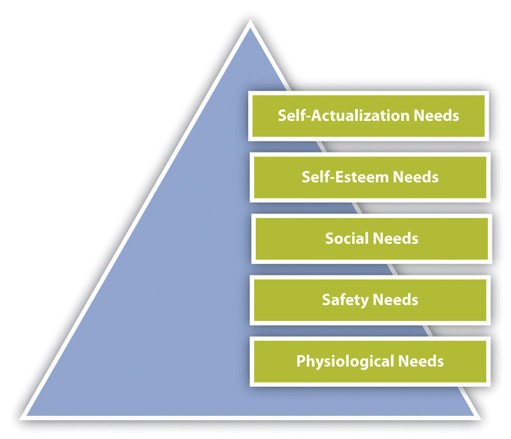
Physiological needs form the foundation of Maslow’s Hierarchy of Needs and are the most essential for human survival. The closer a need is to the base of the hierarchy, the more fundamental it is. However, persuasive appeals rarely target physiological needs, as it would be both ineffective and unethical to manipulate an audience by promising or withholding necessities like food, air, or water. A person struggling to meet these basic needs is unlikely to engage in persuasive reasoning, making appeals at this level largely impractical.
Similarly, appealing to self-actualization needs presents ethical challenges. Self-actualization refers to the desire to achieve one’s highest potential, whether through intellectual growth, artistic expression, or spiritual fulfilment. Because these needs are deeply personal and individual, they are often protected from external influence. Pursuits such as higher education, creative endeavours, or personal spiritual journeys are intrinsically motivated, making them less suitable for persuasive appeals. Attempting to persuade someone regarding self-actualization can be seen as intrusive, and ethical communicators should approach this level with caution.
Speakers are far more likely to effectively appeal to safety, social, and self-esteem needs, as these involve tangible concerns that audiences are willing to engage with in persuasive contexts.
Appealing to Safety Needs
People seek safety and security not only for themselves but also for their loved ones. Persuasive messages that emphasize safety often highlight ways to increase protection and minimize risk.
- Positive motivation appeals to safety by presenting solutions that enhance security. A health organization promoting flu shots, for example, might emphasize that getting vaccinated will help prevent illness and protect vulnerable family members.
- Negative motivation appeals to safety by warning of potential dangers if action is not taken. Insurance companies frequently use this approach by highlighting the risks of not having adequate coverage, encouraging consumers to protect themselves from financial loss.
Ethical Considerations in Fear Appeals
When combined with negative motivation, safety appeals often rely on some degree of fear as a persuasive tool. While fear-based persuasion is common, it must be used ethically to avoid manipulation or unnecessary distress. Ethical guidelines for fear appeals include:
- Do not overuse fear appeals. Excessive fear can overwhelm or desensitize an audience, reducing the effectiveness of the message.
- Ensure the threat is credible and supported by evidence. The risk must be realistic and backed by verifiable information.
- Empower the audience to address the threat. Provide actionable solutions so that the audience feels capable of mitigating the risk rather than feeling helpless.
A compelling and ethical example of a safety appeal can be found in a brochure produced by Kids and Cars, an organization dedicated to child safety. The pamphlet’s cover featured a bold yellow and black “Warning” sign alongside a stark black-and-white image of a young boy retrieving a ball as a car’s rear fender loomed behind him. This powerful visual immediately captured attention and evoked concern.
Inside the brochure, the fear appeal was ethically structured. It presented factual statistics, stating that at least two children per week are killed in back-over accidents. Instead of merely alarming the audience, the brochure followed up with practical safety tips, empowering parents and drivers to prevent such tragedies. This balanced approach demonstrates how fear can be used responsibly in persuasive messaging, motivating action while respecting the audience’s ability to make informed decisions.
Humans are inherently social beings, and our social needs drive our desire to belong to supportive and caring groups. We fulfil these needs through interpersonal relationships ranging from casual acquaintances to deep personal connections. Additionally, people form bonds through interest groups, social clubs, and political organizations, which help shape identity and reinforce a sense of belonging.
The power of peer pressure serves as a strong example of how social needs motivate behaviour. People will go to great lengths—and sometimes make decisions they later regret—in an attempt to fit into an “in-group.” Advertisers frequently exploit this desire for exclusivity, crafting messages that suggest inclusion in a special group or status.
Persuasive messages often combine social appeals with positive and negative motivation:
- Positive motivation suggests that following a message will lead to acceptance, status, or a sense of belonging. Advertisements that say, “Join the elite community of members who use this product,” tap into this strategy.
- Negative motivation plays on the fear of exclusion, using messages such as, “Don’t be left behind—everyone is upgrading to the latest version!” While these tactics may rely on the bandwagon fallacy, they still appeal to the insecurities people have about being left out.
Appealing to Self-Esteem Needs
Beyond social belonging, people have a fundamental need to feel good about themselves and to be respected by others. Appeals to self-esteem needs leverage this desire by suggesting that accepting a persuasive message will lead to increased respect, status, or personal satisfaction.
- A financial planner might persuade clients by inviting them to imagine the prosperity they could achieve through smart investments.
- A publicly funded radio station might appeal to a donor’s sense of contribution by emphasizing how their financial support benefits society.
- The health and beauty industries frequently use self-esteem appeals, promising increased attractiveness and confidence through their products.
While it may seem superficial, self-esteem is an essential part of psychological well-being. Ethical speakers should recognize the power of self-esteem appeals and use them responsibly, ensuring that messages empower audiences rather than exploit insecurities. Instead of focusing on unrealistic ideals, ethical persuasion emphasizes prosperity, personal growth, and meaningful contribution to society.
Review of Persuasive Strategies
- Ethos: Builds a speaker’s credibility, fostering trust and authority.
- Logos: Appeals to logic and reasoning, prompting a rational response.
- Pathos: Appeals to emotion, creating a connection with the audience.
- Cognitive Dissonance: Encourages change by highlighting inconsistencies between existing beliefs and new information.
- Positive Motivation: Promises rewards for accepting the speaker’s message.
- Negative Motivation: Warns of negative consequences if the message is rejected.
- Appeals to Safety Needs: Evokes concern for personal security and the well-being of loved ones.
- Appeals to Social Needs: Engages an audience’s desire for inclusion and belonging.
- Appeals to Self-Esteem Needs: Encourages an audience to think well of themselves and seek respect from others.
By thoughtfully incorporating social and self-esteem appeals into persuasive messages, speakers can create more compelling and ethical arguments, ensuring their influence is both effective and responsible.
Sample Persuasive Speech Outline
Title: Education Behind Bars: The Key to Rehabilitation
General Purpose: To persuade
Specific Purpose: By the end of my speech, my audience will believe that prisoners should have the right to an education.
Thesis Statement: Education should be available in all prisons because denying it has negative consequences for both prisoners and society, whereas providing education offers long-term benefits for both.
Introduction
Attention Getter:
More than thirty years ago, Supreme Court Justice Warren Burger stated, “We must accept the reality that to confine offenders behind walls without trying to change them is an expensive folly with short-term benefits—winning battles while losing the war.” His words still ring true today: locking people away without offering opportunities for rehabilitation is both costly and ineffective.
Introduction of Topic:
Education is highly valued in our society, yet it is often not extended to incarcerated individuals. Many argue that prisoners should not have access to education, but I believe that providing educational opportunities is essential to rehabilitation and reintegration.
Credibility and Relevance:
Through my research, I have come to understand the profound impact that education can have on incarcerated individuals. As someone who aspires to be a teacher, I strongly believe in the right to learn for all—regardless of circumstances. While I recognize that some of you may disagree, consider this: one day, someone you know or love could end up in prison due to a mistake. Wouldn’t you want them to have the opportunity to rebuild their life?
Preview of Main Points:
Today, I will discuss:
- The urgent need for prisoner education.
- A structured curriculum that can effectively meet that need.
- The benefits of education for prisoners, prison staff, and society as a whole.
Transition to Body:
Let’s start by examining why education is a critical need for incarcerated individuals.
Body
I. The Need for Prisoner Education
A. Rising incarceration rates and budget constraints have led experts to explore ways to reduce prison populations.
- A 2012 Corrections Today article notes that correctional education is one of the most effective reentry services.
- Former research director of the Federal Bureau of Prisons states that 94% of incarcerated individuals identify education as their top re-entry need, ranking it above employment, housing, or financial assistance.
B. Despite this need, funding for correctional education has decreased, leaving many prisoners without educational opportunities.
C. Many prisoners have low levels of education, putting them at a disadvantage upon release.
- Statistics from 2010 (Corrections Today):
- 40% of state prisoners did not complete high school, compared to 19% of the general population.
- 48% of the general public has taken college classes, but only 11% of state prisoners have.
- A 2003 Studies in the Education of Adults article found high illiteracy rates among prisoners, linking poor reading skills to social exclusion and criminal behaviour.
D. Education helps prisoners break free from negative cycles and damaging stigmas.
- Prisoners are often labeled as criminals, addicts, or deviants.
- A Studies in the Education of Adults article argues that calling an inmate a “student” instead of a “criminal” fosters self-improvement and increases self-worth.
Transition:
Now that we’ve established the need for prisoner education, let’s explore how we can implement an effective curriculum.
II. A Model Curriculum for Prison Education
A. Prison education should be structured to meet diverse needs.
- Corrections Today notes that while most U.S. prisons offer some form of education, programs often face scrutiny and funding challenges.
- Some states require prisoners with low literacy levels to attend school, but education should not be limited to basic skills.
B. A four-tier curriculum can address the varied educational backgrounds of incarcerated individuals:
- Basic literacy and numeracy: One-on-one or small-group instruction for those with limited reading, writing, and math skills.
- GED preparation: A structured high school-equivalency program for those without a diploma.
- College-level and vocational training: General education coursework, vocational skills, and distance learning opportunities.
- Life skills and social training: Courses on budgeting, parenting, communication, and conflict resolution.
C. Additional extracurricular activities can enhance the educational experience (Journal of Correctional Education, 2007).
- Prisoners could organize guest speakers, debates, and academic competitions.
- Peer mentoring programs could empower prisoners to support each other’s learning.
Transition:
Now that we’ve discussed how a structured education program could work, let’s examine the benefits of implementing such a system.
III. The Benefits of Prisoner Education
A. Education reduces recidivism, helping prisoners reintegrate into society.
- Journal of Correctional Education notes that education fosters self-reflection and critical thinking, helping inmates understand the consequences of their actions.
- Corrections Today reports:
- Prisoners who earn a GED reoffend at rates 20% lower than the general prison population.
- Prisoners who complete college degrees reoffend at rates 44% lower than the general population.
B. Education increases employment opportunities for ex-prisoners.
- A Studies in the Education of Adults article explains that prison education improves job prospects, leading to higher wages and a lower likelihood of reoffending.
- Stable employment is a key factor in successful reintegration.
C. Education improves prison environments for both inmates and staff.
- eHow.com reports that prisons with successful education programs experience less violence and tension, making facilities safer for both inmates and correctional officers.
D. Educational programs reduce costs for taxpayers and state budgets.
- Time-off-sentence credits for educational attainment allow for earlier release of rehabilitated inmates.
- Corrections Today notes that during the 2008–09 school year, Indiana’s prisoner education programs saved the state over $68 million in incarceration costs.
Transition to Conclusion:
Clearly, prisoner education is not just beneficial—it is essential.
Conclusion
Summary of Main Points:
We have examined:
- The need for prisoner education, given the low literacy rates and high demand for learning opportunities.
- A structured curriculum that provides basic education, vocational training, and life skills.
- The benefits of prisoner education, including reduced recidivism, improved employment opportunities, safer prison environments, and cost savings for taxpayers.
Closing Statement:
Education is often taken for granted, but for those behind bars, it could mean the difference between a cycle of reoffending and a chance at a new life. As Supreme Court Justice Warren Burger warned, simply locking people away does little to help them—or society. If we truly value rehabilitation, safety, and second chances, then education must be a right—not a privilege—even for those behind bars.
Activity 10: Personal Reflection Journal – Reflection Question 4
Please answer the following reflection questions in any format you like (such as in writing, a video, note form, or a drawing). Save your reflection responses in one large file so you can refer to them later in the course if needed. Please read the text after you have completed the reflection question activity.
Reflection Question 4:
Key Takeaways
- Ethos refers to a speaker’s credibility, which is built on three key dimensions: competence, trustworthiness, and dynamism. Speakers establish ethos by being well-prepared, citing credible research, presenting balanced information without manipulation, and using engaging delivery techniques.
- Logos refers to the reasoning and logic behind an argument. Speakers appeal to logos by presenting factual, objective information, using sound reasoning, and avoiding logical fallacies that could weaken their argument.
- Pathos refers to emotional appeals used to connect with an audience. Speakers appeal to pathos by using vivid language, incorporating personal stories, and employing figurative language such as metaphors and similes to create an emotional impact.
- Cognitive dissonance describes the mental discomfort that arises when new information conflicts with existing beliefs, attitudes, or values. While this discomfort can lead to persuasion, individuals may also cope with dissonance in other ways, such as discrediting the speaker, seeking alternative information, avoiding conflicting sources, or reinterpreting the new information to fit their existing beliefs.
- Persuasive strategies often combine positive and negative motivation with appeals to safety, social, and self-esteem needs to increase their effectiveness. Understanding how these elements interact allows speakers to craft messages that resonate with their audience and inspire action.
Media Attributions
Du Preez, P. (2018, June 9). Man standing in front of a group of people [Photograph]. Unsplash. https://unsplash.com/photos/man-standing-infront-of-group-of-people-Q7wGvnbuwj0
References
Anonymous. (n.d.). 11.4: Persuasive Strategies. In Communication in the Real World – An Introduction to Communication Studies. LibreTexts. https://socialsci.libretexts.org/Bookshelves/Communication/Introduction_to_Communication/Communication_in_the_Real_World_-_An_Introduction_to_Communication_Studies/11%3A_Informative_and_Persuasive_Speaking/11.04%3A_Persuasive_Strategies
Bayliss, P. (2003). Learning behind bars: Time to liberate prison education. Studies in the Education of Adults, 35(2), 157–172.
Behan, C. (2007). Context, creativity and critical reflection: Education in correctional institutions. Journal of Correctional Education, 58(2), 157–169.
Broemmel, M. (n.d.). What is jail work release? Legal Beagle. https://legalbeagle.com/8110542-types-prison-rehabilitation.html
Canada. (2019). Education programs. Correctional Services Canada. https://www.canada.ca/en/correctional-service/programs/offenders/programs/education-programs.html
Cooper, M. D., & Nothstine, W. L. (1996). Power persuasion: Moving an ancient art into the media age. Educational Video Group.
Foley, R. (2004). Correctional education: Characteristics of academic programs serving incarcerated adults. Journal of Correctional Education, 55(1), 6–21.
Maslow, A. H. (1943). A theory of human motivation. Psychological Review, 50, 370–96.
Steurer, S. J., Linton, J., Nally, J., & Lockwood, S. (2010). The top-nine reasons to increase correctional education programs. Corrections Today, 72(4), 40–43.
Stiff, J. B., & Mongeau, P. A. (2003). Persuasive communication (2nd ed.). Guilford.