Topic 1: Media Studies and Popular Communication
Activity 1: Reading – Media Studies and Popular Communication
Please read the following text which introduces you to media studies and popular communication.
This activity is adapted from 8.1: Media Studies and Popular Communication in Communication Literary: An Introduction to Communication Studies by Dr. Victoria Newsom and Desiree Ann Montenegro, MA which is shared under a CC BY-NC-SA 4.0 license. Changes for readability, to add Canadian context, and to add illustrations as cited from other sources.
Studies in Popular Communication
One of the most visible aspects of contemporary communication is popular culture. In communication studies, popular culture is analyzed because it reflects the values, ideologies, concerns, and public issues of the society that produces it (Brandt & Clare, 2018; Storey, 2018).
Brandt and Clare (2018) explain:
As a nation increasingly immersed in media, entertainment, and corporate products, our everyday lives are often shaped by these elements of popular culture. Therefore, we must give them the attention they deserve, as they provide valuable insights into our culture, society, and the world around us (p. 4).
Popular communication not only reflects culture but also actively shapes it. Consider the argument that the Hockey Night in Canada theme song or Degrassi have played significant roles in shaping Canadian identity. Popular culture can serve as both a unifying force that connects people across cultural boundaries and a divisive tool that reinforces ideological differences.
The Culture Industry
While every society has had forms of popular culture, our contemporary understanding of it is closely tied to mass media and the industries that create cultural products. In this context, popular culture includes books, magazines, television, radio, social media, film, and their industrial production. Other forms of popular culture, such as theatre, festivals, concerts, ceremonies, and folklore, also share a key communication function with mass media: they reach large and diverse audiences and often carry similar cultural messages.
All of these cultural artifacts are shaped by what Adorno and Horkheimer (1944/1946) refer to as the culture industry. These artifacts—whether television shows, viral TikTok videos, or national sporting events—are cultural texts that are produced within a society and reflect its values and ideologies. The culture industry mediates, presents, and distributes these artifacts, making them widely accessible while simultaneously embedding them into everyday life (Brandt & Clare, 2018; Storey, 2018). As a result, popular culture products become so deeply integrated into daily routines that their influence can seem invisible. For example, consider the role of smartphones in everyday interactions. They shape how we present ourselves, communicate, and engage with the world, yet their presence often goes unnoticed because they have become so normalized.

The Culture Industry and Mass Production of Culture
The concept of the culture industry is rooted in the idea that the production values and messages embedded in cultural texts are shaped by corporate ownership and capitalist priorities. As a result, mass-mediated art is not necessarily valuable to society in an artistic or intellectual sense; rather, it serves the interests of capitalism and, more broadly, cultural imperialism (Storey, 2018). This critique, developed by the Frankfurt School of cultural theory, became a foundational perspective in European academic studies on the role of popular culture in society.
The Frankfurt School was composed primarily of dissident Marxist scholars who believed that many Communist governments had abandoned the core values of Marxist theory. Their approach focused on critiquing hegemonic structures and analyzing the production-consumption cycles of cultural products (Storey, 2018). They viewed society as a kind of factory that mass-produced cultural artifacts, which were then sold back to the very people who worked within the system—the general public. Cultural products were created on a large scale, while advertisers and marketing professionals continuously sought new ways to sell them to consumers.
In 1944, Adorno and Horkheimer criticized American popular culture as a form of mass culture that, in their view, was eroding what they considered to be authentic culture (Adorno & Horkheimer, 1944/1946; Storey, 2018). For them, authentic culture emerged from marginalized groups—people outside of mainstream society—rather than from corporate-controlled media industries. For example, Indigenous storytelling traditions, Métis fiddling, and folk art from rural communities could be considered forms of authentic culture, as they arise organically from lived experience rather than being manufactured for profit.
Writing from a Marxist perspective, Adorno and Horkheimer argued that authentic culture has the potential to resist hegemony—the dominant social and political forces that reinforce power structures. For example, patriarchy and Whiteness are forms of hegemony that shape cultural production. In contrast, they viewed mass culture as art that merely reproduces and reinforces these dominant ideologies, making it less valuable in terms of social and political critique.

Adorno and other scholars from the Frankfurt School argue that mass communication products create an artificial sense of well-being that contrasts sharply with the real suffering and struggles experienced by people around the world (Storey, 2018). They contend that mass cultural products—such as Hollywood films and popular music—tend to be formulaic and simplistic, reducing the need for audiences to engage with these art forms creatively or critically.
The repetitive and predictable nature of popular culture fosters familiarity and comfort for audiences. According to Adorno and Horkheimer (1944/1946), the culture industry generates a false sense of security and promotes consumerist rationality, encouraging people to believe that purchasing products will lead to happiness and fulfilment. In other words, mass culture can “dumb down” audiences by discouraging independent thought and masking the extent to which they are being manipulated. It constructs artificial ideals of beauty and success, convincing consumers that by buying into these cultural narratives—whether through fashion, entertainment, or lifestyle products—they can achieve the same versions of happiness portrayed in the media. The authors warn that this system risks homogenizing society, reducing individuals to passive consumers who are easily controlled by economic and political elites (Adorno & Horkheimer, 1944/1946; Storey, 2018).
Today, popular culture extends beyond traditional mass media such as television and film to include digital communication technologies like social media, online streaming platforms, and interactive entertainment. These platforms shape news media, music production, and public discourse. However, popular culture is not limited to technological forms; it also encompasses theatre, folklore, urban legends, fashion, advertising, tourism, and leisure activities. As you can see, popular culture permeates many aspects of daily life, and each of these cultural expressions is fundamentally tied to communication.
As media technologies evolve, so too do our understandings of popular culture and its role in shaping societal values and identities.
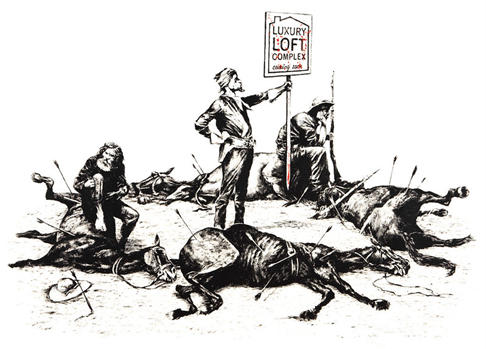
The study of popular culture, like the study of communication, has a long history. While communication technologies continue to evolve, the role of popular communication in daily life remains significant. Folklore and dramatic traditions date back to the earliest days of human history and rhetoric. In many societies, bards and storytellers passed mythic narratives from generation to generation, reinforcing cultural norms and values (Burke, 1978). One well-documented example of early academic research in this area is the collection of folktales by the Brothers Grimm, which aimed to preserve and analyze the myths and stories that help define communities. Folklorist Alan Dundes (1964) argues that the texts, textures, and contexts of folklore collectively construct cultures. These forms of storytelling, whether oral or written, are early examples of mass communication (Campbell et al., 2017).
Like many other fields in communication studies, contemporary popular culture research emerged in the mid-twentieth century, significantly influenced by the social movements of that era. Scholars in this field draw from a range of research paradigms and methodologies, sharing intellectual roots with cultural studies, cultural anthropology, folklore, and sociology. However, the scope of popular culture studies is often debated, as different disciplines define and approach the subject in distinct ways.
In communication studies, behaviourist scholars often conceptualize popular culture as mass culture—culture produced for and consumed by the largest segments of society (Merrigan & Houston, 2015). This approach typically focuses on mass media and audience analysis, with an emphasis on predicting and influencing audience behaviour. Such studies are particularly relevant in fields like marketing, advertising, and business.
Interpretive approaches, by contrast, traditionally define popular culture as folk culture or working-class culture, distinguishing it from high culture, which has historically been associated with elite or upper-class cultural production (Merrigan & Houston, 2015; Storey, 2018). While contemporary scholars often challenge rigid distinctions between “high” and “low” art forms, this tradition still informs debates about mass-produced cultural products versus popular culture that emerges from specific local identities.
From a critical perspective, scholars argue that popular culture often serves as dominant culture—a mechanism of social control that reinforces existing power structures (Gibson & Hartley, 1998; Merrigan & Houston, 2015; Storey, 2018). This perspective, which critiques the ways in which cultural industries shape ideology and maintain hegemonic power, is one of the foundational arguments in the field of popular culture studies.
Importantly, these labels—mass culture, folk culture, and dominant culture—are not mutually exclusive. Popular culture is a dynamic and evolving field that continues to shape, and be shaped by, social, political, and technological changes.

Activity 2: Personal Reflection Journal – Reflection Question 1
Please answer the following reflection questions in any format you like (such as in writing, a video, note form, or a drawing). Save your reflection responses in one large file so you can refer to them later in the course if needed.
Reflection Question 1:
Media Attributions
Hoehne, J. (2021, January 22). Gold ring on white paper [Photograph]. Unsplash. https://unsplash.com/photos/gold-ring-on-white-paper-c-jTL24e50c
Newsom, V. and Montenegro, D.A. (n.d.). Module 8.1: Media studies and popular communication. In Communication Literary: An Introduction to Communication Studies. https://lor.instructure.com/resources/6632a178ac5040948fc971be0511f98c
Pamp, J. (2019, October 21). Man holding wind instrument [Photograph]. Unsplash. https://unsplash.com/photos/man-holding-wind-instrument-uuKE4DnGcfY
Worrall, R. (2018, July 23). Person holding black phone [Photograph]. Unsplash. https://unsplash.com/photos/person-holding-black-phone-FPt10LXK0cg
References
Adorno, T., & Horkheimer, M. (1946). The culture industry: Enlightenment as mass deception. In S. During (Ed.), The cultural studies reader. Routledge. Original work published 1944.
Brandt, J., & Clare, C. (2018). An introduction to popular culture in the US: People, politics, and power. Bloomsbury Academic.
Burke, P. (1978). Popular culture in early modern Europe. Harper & Row.
Campbell, R., Martin, C. R., & Fabos, B. (2017). Media and culture: Mass communication in a digital age (11th ed.). Bedford/St, Martin’s.
Dundes, A. (1964). Texture, text, and context. Southern Folklore Quarterly, 28(4), 251–265.
Gibson, M., & Hartley, J. (1998). Forty years of cultural studies: An interview with Richard Hoggart, October 1997. International Journal of Cultural Studies, 1(1), 11–23. https://doi.org/10.1177/136787799800100102
Merrigan, G., & Huston, C.L. (2015). Communication research methods (3rd ed.). Oxford University Press.
Newsom, V. and Montenegro, D.A. (n.d.). Module 8: Popular Communication. In Communication Literary: An Introduction to Communication Studies. https://lor.instructure.com/resources/6632a178ac5040948fc971be0511f98c
Storey, J. (2018). Cultural theory and popular culture: An Introduction (8th ed.). Routledge.