Topic 2: Mass Communication and Media Studies
Activity 3: Reading – Mass Communication and Media Studies
Please read the following text which introduces you to mass communication and media studies.
This activity is adapted from 8.2: Two Approaches: Mass Communication and Media Studies in Communication Literary: An Introduction to Communication Studies by Dr. Victoria Newsom and Desiree Ann Montenegro, MA which is shared under a CC BY-NC-SA 4.0 license. Changes for readability, to add Canadian context, and to add illustrations as cited from other sources.
The study of popular communication is tied to two historical approaches to media communication studies: mass communication studies and media studies. Mass communication evolved as a primarily quantitative-based behavioural field with methods utilizing statistical analyses of audience responses to media products. In contrast, media studies approaches draw from the interpretive and critical traditions and increasingly became more critical in approach.

Media Effects and Audience Influence
Media effects studies examine how media influences audiences and shapes audience behaviour. As discussed in previous research, media producers are primarily focused on selling their products to the public, which requires them to understand and appeal to various audience demographics (Dunwoody, 2008). Historically, media effects research has explored how messages reach the largest possible audiences. More recently, however, scholars have focused on how media targets specific consumer groups due to the increasing number of media choices available (Bennett et al., 2018; Pew Research Center, 2014; Ems & Gonzales, 2016). Media effects research helps producers develop marketing strategies that are more precisely tailored to consumers based on their interests, values, locations, demographic categories, and technology use. While media producers see this as a valuable tool, media effects scholars often critique these processes, raising concerns about their social and ethical implications.
Communication theorist James Carey (1996) explains:
Mass communication research began in the years surrounding World War I as a response to a widespread fear of propaganda: wartime propaganda by the major military powers, peacetime propaganda by organized interests, particularly the modern corporation and the business class. The fear of propaganda was fueled by the spread and increasing sophistication of advertising and public relations, but the indictment of these practices moved from the arena of news and public affairs across the landscape of mass-produced culture and entertainment. If the cognitive and attitudinal life of the citizen was under assault by propaganda, the moral, appreciative, and affective life of children (and the child in us all) was similarly assailed by a banal and pernicious system of cultural production emanating from massive, concentrated institutions. (p. 22)
Rooted in research from the Chicago School of Sociology, which developed in the early 1900s, media effects studies were initially concerned with using mass media to predict human behaviour (Carey, 1996; Scheufele & Tewksbury, 2007). The Chicago School was among the first academic institutions to study modern urban cultures, employing quantitative methods to analyze behavioural patterns. Early scholars in this tradition viewed electronic communication as a tool for facilitating democratic engagement.
One of the key figures in the Chicago School, former journalist Robert E. Park (1940), observed the ways in which public opinion could be shaped by mass media while studying in Germany. Park argued that the press could function as a social glue by transmitting ideological values to mass audiences. His work contributed to the development of agenda-setting theory, which suggests that the media influences what issues the public perceives as important (McCombs & Shaw, 1972; Scheufele & Tewksbury, 2007).
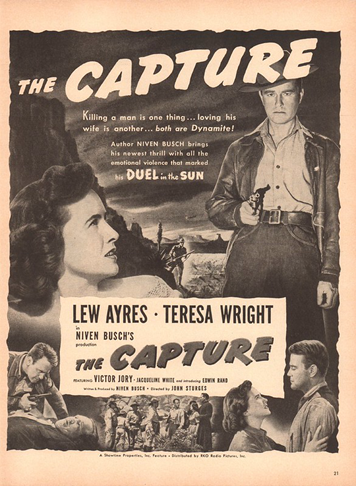
In the earliest years of mass media studies, the media and popular culture were seen as potential tools for generating social progress. By the 1930s, a general fear of Hollywood morals permeated discussion about mass media and in 1934 the Hays Code of moral censorship went into effect in the film industry (Black, 1989; Gardner, 1987; Johnson-Yale, 2015; Mondello, 2008). The code was not abandoned until 1968 (Black, 1989; Gardner, 1987). In 1933, in response to the rising concern regarding Hollywood’s moral impact on society, Chicago School scholar Herbert Blumer (1933) published a study of movie audiences where the participants recorded their experiences. Blumer reported that children and young adults learned behaviours from films, including how to kiss, how to pick pockets, what clothes and hairstyles to wear, and general attitudes and belief systems.

Harold Lasswell (1927) published an account of the propaganda techniques used during the First World War. Lasswell argued that communication could be broken into specific components, such the texture of a message. His 1948 definition of communication read as follows: “Who says what to whom in what channel, with what effect?” (p. 39). Drawing on Freudian theory, Lasswell argued that media messages, including propaganda, should be measured in terms of their impact or effect on audiences. This idea became the basis for media effects studies, which focus on what happens to audiences after exposure, generally prolonged exposure, to media products.

The power of mass media has long been a subject of concern, particularly in its potential to shape and reinforce ideologies. This concern led to the development of the hypodermic needle theory (Lasswell, 1927), which proposed that media could inject values and ideals directly into audiences through mass communication products (Carey, 1996). One of the most famous historical events often cited as evidence for this theory was the 1938 radio broadcast of War of the Worlds by Orson Welles. Presented in the format of a real news report, the broadcast allegedly caused widespread panic among listeners who did not realize it was a fictional dramatization (Bratich, 2005; Carey, 1996; Pooley & Socolow, 2013). While media accounts at the time reported extreme reactions, including suicides, scholars have debated whether the extent of the panic was exaggerated by newspapers seeking to discredit radio as a competing news medium.
Although the hypodermic needle theory was challenged as early as 1948 by Paul Lazarsfeld (Lazarsfeld, 1948; Sills, 1996), it remained influential in media and marketing industries. Producers of popular culture continued to use it as a justification for mass marketing films, music, and television programming. Advertisers increasingly integrated commercial messaging into media content, particularly targeting demographics with disposable income, such as housewives and teenagers. The soap opera format, for instance, was created specifically to market soap and other household products to women—hence the name. Soap companies, including Procter & Gamble, were among the first to sponsor these programs, with The Guiding Light remaining on the air (first on radio, then television) for over 70 years (Lavin, 1995; Meyers, 2015; Rubin & Perse, 1987; Seiter, 1989). This American commercial approach to media was in stark contrast to the more critical theories emerging in Germany at the same time, which may explain why Adorno was so vehement in his critique of American consumer culture.
One of the strongest arguments against the hypodermic needle theory came from Herta Herzog (1941, 1944), who argued that audiences are not passive recipients of media messages but instead gravitate toward media that aligns with their ideological perspectives and emotional needs. Studying radio soap opera audiences, Herzog found that listeners identified three main reasons for engaging with these programs: emotional fulfillment, wishful thinking, and learning opportunities. She explains:
Since the life of very many middle-class and lower-middle-class people is uneventful, the variety of incidents in these programs is many times greater than anything which these women could live through or observe themselves. Thus the question comes up of whether, through daytime serials, radio is likely to have a great influence upon the attitude of these listeners toward their own lives and the problems they have to meet. (Herzog, 1941, p. 66)
Producers reinforced this engagement by incorporating dramatic cliffhangers and ongoing storylines that encouraged continued listening.
In response to critics of the hypodermic needle theory, Lasswell (1948) expanded on his earlier ideas, proposing that media serve four primary functions: surveillance, correlation, entertainment, and cultural transmission. These ideas contributed to the development of Uses and Gratifications Theory, which argues that audiences actively select media based on their needs and preferences rather than passively absorbing content (Lasswell, 1948). According to this theory, audiences choose media that aligns with their interests, and media organizations must compete for consumer attention by offering diverse content. Furthermore, media must also compete with other forms of entertainment and information sources, as individuals have the autonomy to decide how they spend their time.

By the mid-20th century, media effects studies had become firmly established as a major branch of communication research. Throughout the following decades, media effects remained the dominant framework for studying media in the United States. With the expansion of television as a primary medium, researchers focused heavily on audience analysis, largely driven by the commercial imperative to maximize sales and advertising revenue.
By the 1960s, as social movements increasingly influenced public discourse and media representation, critical perspectives—particularly those influenced by the Frankfurt School—began to gain traction among media scholars. These Marxist-inspired critiques challenged the notion that media simply reflected reality, arguing instead that media actively shaped ideological structures and reinforced systems of power. Despite this growing critical lens, American media research remained largely focused on media forms, audience behaviour, and market-driven analysis.
Today, the impact of media on politics, culture, and civic life continues to be a central concern in mass communication scholarship. Researchers explore how media influence public opinion, political engagement, cultural identity, and social change in an era defined by digital and networked communication. As media technologies evolve, so too do the questions scholars ask about their role in shaping society.

In 1964, Canadian media theorist Marshall McLuhan published Understanding Media: The Extensions of Man, introducing a phrase that would shape media analysis for decades and gain renewed attention with the rise of digital and social media. McLuhan famously argued that “the medium is the message” (p. 7)—suggesting that we should focus on the media form itself rather than analyzing content separately from its medium. His central claim was that the structure and format of media shape how messages are received and understood, often having a greater social impact than the content itself.
For example, the 1938 War of the Worlds radio broadcast would not have had the same effect if it had been presented on television or in print. The auditory-only format of radio heightened the sense of realism and urgency, as listeners had no visual cues to confirm that the broadcast was fictional. Similarly, different media formats come with built-in conventions that shape audience expectations. A television sitcom, for instance, often includes a laugh track that signals when and where humour is intended. This raises an important question: How do these built-in media conventions influence our perceptions of humour, entertainment, and reality itself?
McLuhan’s argument extends beyond media content to the ways in which media forms evolve and incorporate previous formats. Newspapers rely on written language, films integrate text and cinematography, and digital platforms like Facebook build on earlier communication technologies, dating back to the telegraph. Consider the different experiences of engaging with a war story through different media: reading about it in a newspaper, watching live footage on television, or following real-time updates from individuals in the conflict zone on Twitter. Each medium presents information differently, shaping not only how we understand events but also how we respond to them. Which format offers more depth? How does each influence our emotional or political reactions?
Ultimately, McLuhan’s work introduced a new way of thinking about media and cultural products. He argued that the structure and form of media might be more influential than the producer’s original intent. This perspective reinforced the idea that consumers, rather than producers, drive popular culture. McLuhan’s insights laid the foundation for the study of popular culture and media as an academic discipline, raising key questions about the relationship between media technology, audience engagement, and cultural power.
Media Studies: Ideological Criticism of the Culture Industry
The development of interpretive and critical media studies emerged in the post-World War II era, alongside the rise of the United States as a dominant political and economic force and the increasing influence of social movements on academic thought. As previously discussed, communication fields—particularly rhetoric and public communication—shifted in the late 20th century toward a critical paradigm. This perspective is grounded in the belief that ideological criticism is essential to understanding communication, and that scholars have a rhetorical responsibility to analyze how media, public discourse, and cultural narratives shape society (Cloud, 1999; McGee & Martin, 1983; Wander, 1983, 1984, 2011, 2013).
Critical media studies followed a similar trajectory, arguing for the necessity of ideological critique in analyzing media artifacts, popular culture, and public rhetoric (Fassett et al., 2018; Vande Berg, 1999). A key goal of this approach is to examine how media is marketed to and potentially exploits particular consumer groups. This critique builds on Adorno’s concept of the culture industry and other neo-Marxist perspectives from the Frankfurt School, which challenged the idea that media serves purely neutral or democratic functions (as discussed in previous modules).
One of the defining features of post-war American culture was a significant increase in disposable income among the middle class. For the first time, a large portion of the population had excess money to spend on entertainment, fashion, and leisure activities. Notably, one of the largest and most targeted consumer groups during this period was a demographic that had only recently been given a distinct cultural label: the teenager (Bernard, 1961; Massoni, 2016; Spring, 2003).
This shift in consumer culture had profound implications for media and advertising. Teenagers were positioned as a lucrative market, with film, music, television, and fashion industries designing products specifically for their consumption. This period marked a turning point in media studies, as scholars increasingly questioned how cultural industries shaped identity, reinforced social norms, and maintained ideological power through targeted media consumption.
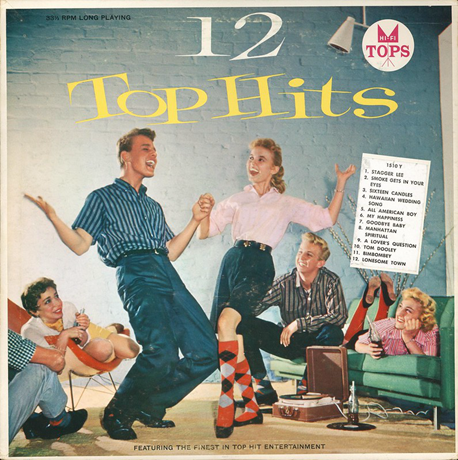
Social and economic forces in the early 20th century transformed traditional understandings of the transition from childhood to adulthood. One significant change was the expansion of secondary education. Education reforms in the 1920s led to increased high school attendance, effectively extending childhood for many young people who, in previous generations, would have entered the workforce at an earlier age (Coulter, 2015). Another major factor in shaping the teenage demographic was the rise of car culture. Automobiles provided teens with greater freedom to travel beyond their neighbourhoods for leisure and dating. Car culture also contributed to the suburban boom and the expansion of the middle class (London, 1972; Whiteley, 1987). Additionally, improved transportation infrastructure allowed for further educational reform, as school buses made it possible for students to attend larger, centralized schools in suburban areas.
As high school students, teenagers were not expected to work full-time. After World War II, when men reentered the workforce, household incomes stabilized, and many suburban teens were no longer required to contribute financially to their families. Instead, they engaged in after-school activities and took part-time jobs for extra spending money. During this period, marketers recognized teenagers as a lucrative and easily influenced consumer group. Unlike previous generations, these young people had disposable income and a strong desire to participate in popular culture. Advertisers saw an opportunity to shape their preferences, encouraging them to spend on clothing, music, movies, and other lifestyle products. Beyond teenagers, other demographics—including housewives and financially secure homeowners—were also identified as having disposable income. Recognizing the potential for profit, advertisers strategically developed campaigns to encourage regular spending and consumer product replacement (Massoni, 2016; Whiteley, 1987).
By the late 1940s and 1950s, housewives emerged as another dominant consumer group. During World War II, many women had entered the workforce, taking on roles in manufacturing and other industries. However, when the war ended and men returned from combat, women were often displaced from these jobs and expected to return to domestic life. For women accustomed to working, the transition to full-time homemaking created a demand for entertainment and social engagement. Marketers capitalized on this shift by designing radio and television programming specifically for housewives, leading to the creation of the soap opera genre (Herzog, 1941, 1944; Mumford, 1995). These programs were built around corporate sponsorships, and product placements became a common feature within the shows themselves. Housewives watching these programs were encouraged to aspire to the lifestyles portrayed on screen, leading to increased consumption of advertised household goods.
Popular culture during this period was therefore shaped to appeal to these carefree consumer audiences, reinforcing the ideology of prosperity and leisure. Media and advertising targeted individuals who had both the time and financial means to spend on non-essential goods. However, scholars from the Frankfurt School, particularly those engaging in Marxist criticism, argued that consumers were not just purchasing products but were themselves being consumed by the culture industry (Storey, 2018). The cycle of mass production and mass consumption ensured that audiences remained locked in an endless pursuit of new products, reinforcing existing social and economic power structures.
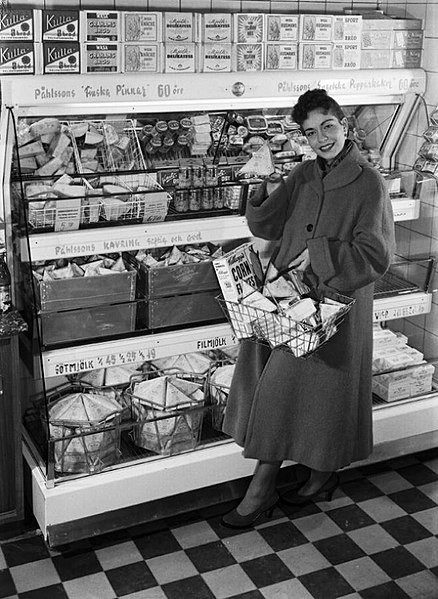
Product placements in film and early television were widespread, embedding advertisements directly into storylines that promoted specific lifestyle values—particularly those tied to consumerism. These narratives reinforced the idea that happiness and success could be achieved through the purchase of particular products. However, not all audiences had access to the lifestyles portrayed in the media. Economic disparities, systemic inequalities, and social barriers meant that many people could not attain the idealized vision of prosperity depicted in television and film.
As a response, ideological criticism emerged as a means of analyzing how popular media and consumer culture shape everyday life while also exposing the ways in which these messages exclude or marginalize certain groups. Scholars in this tradition argue that media representations do more than simply reflect reality—they actively construct it, promoting a narrow, often unattainable vision of success (Fassett et al., 2018). Ideological criticism highlights how these media messages reinforce existing power structures, maintaining the illusion that social mobility and personal fulfilment are universally accessible when, in reality, they remain out of reach for many.
Ideological criticism provides a framework for examining how cultural products generate meaning and reinforce existing social structures. As Vande Berg (1999) explains, cultural meanings are “understood both as centered in empowered ideas and as positively sanctioned in social structures—[they] have served to maintain existing sets of social relations and practices and to prevent social change.” In other words, media critics analyze how mass media products uphold power structures and, in doing so, contribute to the marginalization or oppression of diverse audience groups (Fassett et al., 2018; Ott & Mack, 2010; Vande Berg, 1999).
Because of its focus on power dynamics, ideological criticism draws on multiple theoretical traditions beyond Marxist critique. Critical media studies are also rooted in feminist theory, critical race theory, postcolonial theory, transgender theory, and other approaches that examine how marginalized groups are represented in media (Fassett et al, 2018). These perspectives highlight the ways in which media portrayals influence public perceptions, reinforce stereotypes, and shape social hierarchies.
By the 1990s and early 2000s, media criticism began to replace behavioural mass communication studies in many communication programs and academic publications. However, the media industry remained invested in audience analysis and mass communication research, particularly for marketing and advertising purposes. As a result, many media studies programs merged with departments in marketing, advertising, and journalism, integrating both critical media studies and industry-focused research to examine both the production and reception of media products. This shift reflects the evolving landscape of media studies, balancing ideological critique with practical applications in contemporary media industries.
Activity 4: Personal Reflection Journal – Reflection Question 2
Please answer the following reflection questions in any format you like (such as in writing, a video, note form, or a drawing). Save your reflection responses in one large file so you can refer to them later in the course if needed.
Reflection Question 2:
Media plays a powerful role in shaping cultural norms, reinforcing social structures, and influencing audience perceptions. Drawing on the concepts of ideological criticism, media effects, and/or McLuhan’s argument that “the medium is the message,” reflect on how a specific media product (a film, television show, advertisement, or social media trend) reinforces or challenges dominant power structures.
Answer one of the following questions:
- How does the format of the medium itself shape the message it conveys?
- In what ways does the media product encourage consumerism or reinforce specific ideological values?
- Who is represented in the media product, and who is excluded?
- How might a critical media scholar analyze this media product differently than a media producer or advertiser?
Use examples from the readings to support your response.
Media Attributions
Baker, C. (2017, October 27). Children standing while holding jack o lantern and wearing costume [Photograph]. Unsplash. https://unsplash.com/photos/children-standing-while-holding-jack-o-lantern-and-wearing-costume-7FC-84Ap_IU
Drost, J. (2018, September 10). Red rotary phone wallpaper [Photograph]. Unsplash. https://unsplash.com/photos/red-rotary-phone-wallpaper-oC66vXsqnc8
Gardner, J. (2019, June 19). Man reading newspaper near door [Photograph]. Unsplash. https://unsplash.com/photos/man-reading-newspaper-near-door-sf78NYkE9uY
Goldsberry, P. (2019, April 11). Man sitting beside woman while picking popcorn [Photograph]. Unsplash. https://unsplash.com/photos/man-sitting-beside-woman-while-picking-popcorn-CtV2fhyHj6I
M Accelerator. (2020, September 8). Man in blue and white plaid button up shirt sitting on black chair [Photograph]. Unsplash. https://unsplash.com/photos/man-in-blue-and-white-plaid-button-up-shirt-sitting-on-black-chair-zJYMJIrQYTE
Tetra Pak. (2011, July 20). Housewife at the dairy counter in a Swedish shop [Photograph]. Flickr. https://www.flickr.com/photos/tetrapak/5956902687/
References
Bennett, W. L., & Pfetsch, B. (2018). Rethinking political communication in a time of disrupted public spheres. Journal of Communication, 68(2), 243–253. https://doi.org/10.1093/joc/jqx017
Bernard, J. (1961). Teen-age culture: An overview. The Annals of the American Academy of Political and Social Science, 338(1), 1–12.
Black, G. D. (1989). Hollywood Censored: The Production Code Administration and the Hollywood Film Industry, 1930-1940. Film History, 167–189.
Blumer, H. (1933). Movies and conduct. The MacMillan Company.
Bratich, J. Z. (2005). Amassing the multitude: Revisiting early audience studies. Communication Theory, 15(3), 242–265. https://doi.org/10.1111/j.1468-2885.2005.tb00335.x
Carey, J. W. (1996). The Chicago School and mass communication research. In E. E. Dennis, & E. Wartella (Eds.), American communication research: The remembered history (pp. 21–38). Routledge.
Cloud, D. L. (1999). The null persona: Race and the rhetoric of silence in the uprising of ’34. Rhetoric and Public Affairs, 2(2), 177–209. DOI: 10.1353/rap.2010.0014
Coulter, N. (2015). Teens. In D.T. Cook, & J. M. Ryan (Eds.), The Wiley Blackwell encyclopedia of consumption and consumer studies (pp. 543–545). Wiley Blackwell.
Dunwoody, S. (2008). Science journalism. In M. Bucchi, & B. Trench (Eds.), Handbook of public communication of science and technology (pp. 15–26). Routledge.
Ems, L., & Gonzales, A. L. (2016). Subculture-centered public health communication: A social media strategy. New Media and Society, 18(8), 1750–1767. https://doi.org/10.1177/1461444815570294
Fairbanks, J. (Producer), & Champion, G. (Director). (1956). Once upon a honeymoon [Video]. Jerry Fairbanks Productions. https://archive.org/details/OnceUpon1956
Fassett, D. L., Warren, J. T., & Nainby, K. (2018). Communication: A critical/cultural introduction (3rd ed.). Cognella.
Gardner, G. C. (1987). The censorship papers: Movie censorship letters from the Hays Office, 1934-1968. Dodd Mead.
Herzog, H. (1941). On borrowed experience: An analysis of listening to daytime sketches. Studies in Philosophy and Social Science, 9(1), 65–95.
Herzog, H. (1944). What do we really know about daytime serial listeners? In P.F. Lazarsfeld & F.N. Stanton (Eds.), Radio Research, 1942-1943 (pp. 3–33). Duell, Sloan & Pearce.
Johnson-Yale, C. (2015). Frozen in Hollywood: Postwar film policy and the new power-geometry of globalizing production labor. Critical Studies in Media Communication, 32(1), 33-47. https://doi.org/10.1080/15295036.2014.998251
Lasswell, H. (1927). Propaganda technique in the world war. Kegan Paul, Trench, Trubner.
Lasswell, H. (1948). The structure and function of communications in society. In L. Bryson (Ed.), The communication of ideas (pp. 37–51). Harper.
Lazarsfeld, P. F. (1948). Communication research and the social psychologist. In W. Dennis (Ed.), Current trends in social psychology (pp. 218–273). University of Pittsburgh Press.
Lavin, M. (1995). Creating consumers in the 1930s: Irna Phillips and the radio soap opera. Journal of Consumer Research, 22(1), 75–89. https://doi.org/10.1086/209436
London, H. (1972). The Charles Reich typology and early rock music. Popular Music and Society, 1(2), 65–72.
Massoni, K. (2016). Fashioning teenagers: A cultural history of Seventeen magazine. Routledge.
McCombs, M., & Shaw, D. (1972). The agenda-setting function of mass media. Public Opinion Quarterly, 36(2), 176–187. DOI: 10.1086/267990
McGee, M. C., & Martin, M. A. (1983). Public knowledge and ideological argumentation. Communications Monographs, 50(1), 47–65. https://doi.org/10.1080/03637758309390153
McLuhan, M. (1964). Understanding media: The extensions of man. McGraw-Hill.
Meyers, E. (2015). “Don’t Cry because it’s over, smile because it was:” American soap operas and convergence culture. Critical Studies in Media Communication, 32(5), 333–346.
Mondello, B. (2008, August 8). Remembering Hollywood’s Hays Code, 40 years on. NPR. https://www.npr.org/templates/story/story.php?storyId=93301189
Mumford, R. E. (1995). Love and ideology in the afternoon: Soap opera, women and television genre. Indiana University Press.
Newsom, V. and Montenegro, D.A. (n.d.). Module 8.2: Two approaches: Mass communication and Media Studies. In Communication Literary: An Introduction to Communication Studies. https://lor.instructure.com/resources/6632a178ac5040948fc971be0511f98c
Ott, B. L., & Mack, R. L. (2010). Critical media studies: An introduction. Wiley-Blackwell.
Park, R. E. (1940). News as a form of knowledge: A chapter in the sociology of knowledge. American Journal of Sociology, 45(5), 669–686.
Pew Research Center. (2014). Political polarization in the American public: How increasing ideological uniformity and partisan antipathy affect politics, compromise, and everyday life. http://www.people-press.org/2014/06/12/political-polarization-in-the-american-public/
Pooley, J. D., & Socolow, M. J. (2013). Critical communication history: Checking up on The Invasion from Mars: Hadley Cantril, Paul Lazarsfeld, and the making of a misremembered classic. International Journal of Communication, 7, 29.
Rubin, A. M., & Perse, E. M. (1987). Audience activity and soap opera involvement a uses and effects investigation. Human Communication Research, 14(2), 246–268.
Scheufele, D. A., & Tewksbury, D. (2007). Framing, agenda setting, and priming: The evolution of three media effects models. Journal of Communication, 57(1), 9–20. https://doi.org/10.1111/j.0021-9916.2007.00326.x
Seiter, E. (1989). “To teach and to sell”: Irna Philllips and her sponsors, 1930-1954. Journal of Film and Video, 21–35.
Sills, D. L. (1996). Stanton, Lazarsfeld, and Merton: Pioneers in communication research. In E. E. Dennis, & E. Wartella, (Eds.), American communication research: The remembered history (pp. 105–116). Routledge.
Spring, J. (2003). Educating the consumer-citizen: A history of the marriage of schools, advertising, and media. Routledge.
Storey, J. (2018). Cultural theory and popular culture: An Introduction (8th ed.). Routledge.
Vande Berg, L. R. (1999). The critical sense: Three decades of critical media studies in the wake of Samuel L. Becker’s “rhetorical studies for the contemporary world”. Communication Studies, 50(1), 72–81. https://doi.org/10.1080/10510979909388473
Wander, P. C. (1983). The ideological turn in rhetorical criticism. Central States Speech Journal, 34(1), 1–18. https://doi.org/10.1080/10510978309368110
Wander, P. C. (1984). The third persona: An ideological turn in rhetorical theory. Central States Speech Journal, 35(4), 197–216. https://doi.org/10.1080/10510978409368190
Wander, P. C. (2011). On ideology: Second thoughts. Western Journal of Communication, 75(4), 421–428. DOI: 10.1080/10570314.2011.588898
Wander, P. C. (2013). Shadow songs: History, ideology, and rhetorical responsibility. Troubador.
Wander, P. C. & Jenkins, S. (1972). Rhetoric, society, and the critical response. Quarterly Journal of Speech, 58(4), 441–450. https://doi.org/10.1080/00335637209383142
Whiteley, N. (1987). Toward a throw-away culture: Consumerism, ‘style obsolescence’ and cultural theory in the 1950s and 1960s. Oxford Art Journal, 10(2), 3–27.