Topic 3: Perceiving Others
Activity 6: Reading – Perceiving Others
Please read the following text which explores how we read and perceive others.
This activity contains text from 2.3 Perceiving Others in Professional Communication in Health Studies by Chute, A., Johnston, S., & Pawliuk, B. (2023). (CC BY-NC-SA 4.0). Minor changes for readability.
Some people claim to be a “good judge of character:” they say that they can quickly “size someone up.” This may seem like a leap, but research shows that many people are surprisingly accurate at predicting how an interaction with someone will unfold based on initial impressions. As you read this section, remember that these principles apply to how you perceive others and how others perceive you. Just as others make impressions on us, we make impressions on others. You have already learned how the perception process works in selecting, organizing, and interpreting. In this section, we will focus on how we perceive others, and specifically how we interpret our perceptions of others.
Attribution and Interpretation
You likely have a family member, friend, classmate, or coworker with ideological or political differences. When conversations and inevitable disagreements occur, you may view this person as “pushing your buttons” if you are invested in the issue being debated, or you may view the person as “on their soapbox” if you are not invested. In either case, your existing perceptions of the other person are probably reinforced after your conversation. You may leave the conversation thinking, “They will never wake up and see how ignorant they are! I do not know why I even bother talking to them!” Similar situations occur regularly; some critical psychological processes influence how we perceive others’ behaviours. By examining these processes, and in particular, the process of attribution, we can see how our communication with others is affected by explanations that we create for others’ behaviour. In addition, we will learn some common errors we make in the attribution process that regularly lead to conflict and misunderstanding.
Fundamental Attribution Error
In most interactions, we are constantly running an attribution script in our minds, which essentially tries to come up with explanations for what is happening (Crittenden, 1983). Why did my neighbour slam the door when she saw me walking down the street? Why is my partner being extra nice to me today? Why did my officemate miss our project team meeting this morning? We generally seek to attribute the cause of others’ behaviours to internal or external factors. Internal attributions connect the cause of behaviours to personal aspects such as personality traits. External attributions connect the cause of behaviours to situational factors. Attributions are essential because our reactions to others’ behaviours are strongly influenced by the explanations we reach (Crittenden, 1983). Imagine that Tamyra and Luke are colleagues. One day, Luke gets frustrated and raises his voice to Tamyra. She may find that behaviour offensive and even consider reporting him if she attributes the cause of the blow-up to his personality because personality traits are usually relatively stable and difficult to control or change.
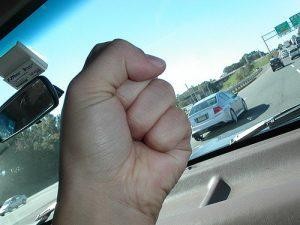
Conversely, Tamyra may be more forgiving if she attributes the cause of his behaviour to situational factors beyond Luke’s control because external factors are usually temporary. If she makes an internal attribution, Tamyra may think, “Wow, this person is a loose cannon. Who knows when he will lose it again?” If she makes an external attribution, she may think, “Luke has been under a lot of pressure to meet deadlines at work and has not been getting much sleep. Once this project is over, I am sure he will be more relaxed.” This process of attribution is ongoing, and, as with many aspects of perception, we are sometimes aware of the attributions we make, and sometimes they are automatic or unconscious. Attribution has received much scholarly attention because some of the most common perceptual errors or biases occur in this part of the perception process.
Perceptual errors can also be biased. In the case of the self-serving bias, the error works in our favour. Just as we tend to attribute others’ behaviours to internal rather than external causes, we do the same for ourselves, mainly when our behaviours have led to something successful or positive (Sillars, 1980). When our behaviours lead to failure or something negative, we attribute the cause to external factors. Thus, the self-serving bias is a perceptual error through which we attribute the cause of our successes to internal personal factors while attributing our failures to external factors beyond our control. When we look at the fundamental attribution error and the self-serving bias together, we can see that we are likely to judge ourselves more favourably than another person, or at least interpret things less personally.
The professor–student relationship is an excellent example of how these concepts can play out. We have often heard that students who earned an unsatisfactory grade on an assignment attribute that grade to their professor’s unfairness or incompetence. Professors may attribute a poor grade to a student’s laziness, attitude, or intelligence. In both cases, the behaviour is explained using an internal attribution and is an example of the fundamental attribution error (Shepperd et al., 2008). Students may attribute their poor grades to their busy schedules or other external situational factors rather than their internal attributions such as lack of motivation, interest, or preparation.
On the other hand, when students get a good grade on a paper, they will likely attribute that cause to their intelligence or hard work rather than an easy assignment or a professor who is an “easy grader.” Both of these examples illustrate the self-serving bias. These psychological processes have implications for our communication because when we attribute causality to another person’s personality, we tend to have a stronger emotional reaction and assume that this personality characteristic is stable. These assumptions may lead us to avoid communication with a person or to react negatively.
Now that you know these common errors, you can monitor them more readily and check your perceptions to verify your attributions.
Impressions and Interpretation
As we perceive others, we make impressions about their personality, likeability, attractiveness, and other characteristics. Although many impressions are personal, what forms them is sometimes based more on circumstances than individual characteristics. The information we take in is not all treated equally. How important are first impressions? Does the last thing you notice about a person stick with you longer because it is more recent? Do we tend to remember the positive or negative things we notice about a person? This section will help answer these questions as we explore how both the timing of information and the content of the messages we receive can influence our perception.
First and Last Impressions
The old saying, “You never get a second chance to make a good impression,” points to the fact that first impressions matter. The brain is a predictive organ in that it wants to know, based on previous experiences and patterns, what to expect next. First impressions fill this need, allowing us to determine how to proceed with an interaction after only a quick assessment of the person we are interacting with (Hargie, 2011). People are surprisingly good at making accurate first impressions about how an interaction will unfold and identifying personality characteristics of people they do not know. Furthermore, based on initial interaction, people can generally predict how another person will behave toward them. People’s accuracy and ability to predict interaction based on first impressions vary, but people with high accuracy are typically socially skilled, have less loneliness, anxiety, and depression, more satisfying relationships, hold more senior positions and have higher salaries (Hargie, 2011). So not only do first impressions matter, but having the ability to form accurate first impressions seems to correlate to many other positive outcomes.
First impressions are enduring because of the primacy effect, which leads us to place more value on the first information we receive about a person. If we interpret the first information we receive from or about a person as positive, then a positive first impression will form and influence how we respond to that person as the interaction continues. Likewise, negative interpretations of information can lead us to form negative first impressions. If you sit down at a clinic and staff walk by for several minutes and no one greets you, you will likely interpret that negatively and not have a good impression of health care providers when they finally show up. This may lead you to be short with the staff, which may lead them not to be as attentive as usual. At this point, a series of negative interactions have set a cycle that will be difficult to reverse.
The recency effect puts more weight on the most recent impression of a person’s communication over earlier impressions. A negative final impression can tarnish even a positive first impression. Imagine that a professor has maintained relatively high credibility with you over the semester. They made an excellent first impression by being organized, approachable, and interesting during the first days of class. The rest of the semester went reasonably well, with no significant conflicts. However, during the last week of the term, they did not have the final papers graded and ready to turn back by the time they said they would, which left you with some uncertainty about how well you needed to do on the final exam to earn an A in the class. When you did get your paper back, on the last day of class, you saw that your grade was much lower than you expected. What would you write on the instructor evaluation if this happened to you? Because of the recency effect, many students would likely give a disproportionate amount of value to the professor’s actions in the final week of the semester, negatively skewing the evaluation, which is supposed to be reflective of the entire semester. Even though the professor only returned one assignment late, that fact is very recent in students’ minds and can overshadow the positive impression that formed many weeks earlier.

Influences on Perception
Physiological Influences
Some of the reasons why we do not always interpret things in the same way are due to physiology. Hence, biology impacts what we do and do not perceive. In this section, we will discuss various physiological influences.
- Senses — our senses can impact on what and where we focus our attention. For instance, if you have a strong sense of smell, you might be more sensitive to a foul-smelling odour than someone who cannot smell anything due to sinus problems. Our senses give us a different perception of the world.
- Health — when we are healthy, we have the stamina and endurance to do many things. However, our bodies may be more inclined to rest when we are sick. Thus, we will perceive information differently. For instance, some of your favourite meals will taste good when you are healthy, but when you are sick, they might not taste great because you cannot smell things due to a stuffy nose.
- Hunger — when you are hungry, it is difficult to concentrate on anything except food. Studies have shown that when people are hungry, they find it difficult to focus on specific tasks.
- Biological cycles — some people are “morning larks,” and some are “night owls.” In other words, there are peaks at which people perform at their highest level. For some individuals, it is late at night, and for others, it is early in the morning. People who perform at their peak times are likely to be more perceptive of information. If you are a person who loves getting up early, you would probably dislike night classes because you are not able to absorb as much information as you could if the class was in the morning.
Psychological Influences
Sometimes influences on perception are not physiological but psychological. These influences include mood and self-concept. These influences are based on our minds, and we cannot detect them in others.
- Mood — whether we are happy or sad can affect how we view the world. For instance, we might view things that happen more positively if we are already happy in the moment.
- Self-concept — if we have a healthy self-concept, we may not be offended if someone makes a negative remark. By contrast, if we have a poor self-concept, we will probably be more influenced by negative remarks. The stronger our self-concept is, the more likely it will affect how we perceive other people’s communication behaviours toward us.
Social Influences
Social influences include sex and gender roles as well as occupational roles. These roles can impact our perceptions. Because we are in these roles, we might likely think differently than others in different roles.
- Sex and gender roles — our culture has particular expectations regarding how men and women should present and conduct themselves. For example, women are expected to be more nurturing than men, and women are often more highly criticized for the appearance of their bodies, fashion choices, and appearance than are men.
- Occupational roles — our jobs influence how we perceive the world. If you were a lawyer, you might be more inclined to take action on civil cases than the average public member because you know how to handle these situations. Moreover, if you work in a health environment, you are more likely to perceive the health of other individuals. You would be able to tell if someone needed urgent medical care or not.
- Another social influence on perception is the standpoint theory (Harding, 2004). This theory states that your perspective is influenced by your experience in the world. If, for example, you were raised in an upper-class family, you might not understand the challenges many working-class families face. This can lead to misinterpretations if you base your interpretation on your perspective without considering others’ perspectives.
Physical and Environmental Characteristics
We make first impressions based on various factors, including physical and environmental characteristics. Regarding physical characteristics, dress and grooming are essential, especially in professional contexts. We have a general schema regarding how to dress and groom for various situations ranging from formal to business casual, to casual, to lounging around the house.
Think about the harm done when people posing as social workers or healthcare providers commit crimes or other acts of malice. Seeing someone in a white lab coat automatically leads us to see that person as an authority figure. We fall into a scripted pattern of deferring to the “health care provider” and not asking too many questions. The Milgram experiments offer a startling example of the power of these influences. In these experiments, participants followed instructions from a man in a white lab coat (who was actually an actor). The “authority figure” prompted the participants to deliver electric shocks to a person in another room whenever the other person answered a memory question incorrectly. The experiment was designed to explore how people defer to authority figures instead of acting independently. Although there was not an actual shock being delivered, the participants did not know this and many participants continued to “shock” (at very high levels of voltage) the other person even after the person supposedly being shocked complained of chest pains and even became unresponsive (Encina, 2003).
Personality
Potential employers often conduct “employment verifications,” during which they ask general questions about the applicant. While they may ask a few questions about intellectual ability or academic performance, they typically ask questions that try to create a personality profile of the applicant. They want to know what kind of leader, coworker, and person they are. This is a smart move on their part because our personalities greatly influence how we see ourselves in the world and how we perceive and interact with others.
Personality is a person’s general way of thinking, feeling, and behaving based on underlying motivations and impulses (McCornack, 2007). These underlying motivations and impulses form our personality traits. Personality traits are “underlying,” but they are quite enduring once a person reaches adulthood. That is not to say that people’s personalities do not change, but significant personality changes are not expected unless they result from major shifts in one’s life (such as trauma). Although personality scholars believe there are thousands of personalities, they all comprise some combination of the same few traits. Much research has been done on personality traits, and the “Big Five” most commonly discussed are extraversion, agreeableness, conscientiousness, neuroticism, and openness (McCrea, 2001, p. 825). These five traits appear to be representative of personalities across cultures.
- Extraversion. This refers to a person’s interest in interacting with others. People with high extroversion like to be around people and are often called “extroverts.” People with low extroversion, often called “introverts,” need less social interaction.
- Agreeableness. This refers to a person’s level of trustworthiness and friendliness. People with high agreeableness are cooperative and likable. People with low agreeableness are suspicious of others and can sometimes be aggressive. This makes it more difficult for people to find them pleasant to be with.
- Conscientiousness. This refers to a person’s level of self-organization and motivation. People with high conscientiousness are methodical, motivated, and dependable. People with low conscientiousness are less focused, careful, or dependable.
- Neuroticism. This refers to a person’s level of negative thoughts regarding themselves. People high in neuroticism are insecure, experience emotional distress, and may be perceived as unstable. People low in neuroticism are more relaxed, have fewer emotional swings, and are perceived as more stable.
- Openness. This refers to a person’s willingness to consider new ideas and perspectives. People high in openness are creative and are perceived as open-minded. People low in openness are more rigid, set in their thinking, and are perceived as “set in their ways.”

Culture and Perception
Our cultural identities and our personalities affect our perceptions. Sometimes we are conscious of these effects, and sometimes we are not. In either case, we tend to favour others who exhibit cultural or personality traits that match our own. This tendency is so strong that it often leads us to assume that people we like are more similar to us than they are. Knowing more about how these forces influence our perceptions can help us become more aware of and competent about the impressions we form of others.
Culture
Race, gender, sexual orientation, class, ability, nationality, and age affect our perceptions. Our cultural identities influence the schemata through which we interpret our perceptions (Schwartz, 2020). As we are socialized into various cultural identities, we internalize beliefs, attitudes, and values shared by others in our cultural group. Schemata held by members of a cultural identity group have similarities, but schemata held by different cultural groups may vary significantly. Unless we are exposed to various cultural groups and learn how others perceive us and the world around them, we will likely have a narrow or naïve view of the world and assume that others see things the way we do. Exposing yourself to and experiencing cultural differences in perspective does not mean that you have to change your schema to match that of another cultural group. Instead, it may offer you a chance to understand better why and how your schemata were constructed the way they were.
You no doubt frequently hear people talking and writing about the “vast differences” between men and women. Whether it is communication, athletic ability, expressing emotions, or perception, people will say that women are one way and men are the other. While it is true that gender affects our perception, the reason for this difference stems more from social norms than genetic, physical, or psychological differences between men and women. We are socialized to perceive differences between men and women, leading us to exaggerate and amplify the existing differences (Halpern, 2000). We see the stereotypes and differences we are told to see, which helps to create a reality in which gender differences are “obvious.” However, in multiple aspects of communication, men and women communicate much more similarly than differently (Halpern, 2000).
As we have learned, perception starts with information that comes through our senses (Macpherson, 2011). Our culture influences how we perceive even basic sensory information. The following list illustrates how culture affects perception:
- Sight. People in different cultures “read” art differently, differing in where they start to look at an image and the types of information they perceive and process.
- Sound. Pleasant and unpleasant harmonies in music can vary by culture.
- Touch. In some cultures, it would be very offensive for a man to touch — even tap on the shoulder — a woman who is not a relative.
- Taste. Tastes for foods vary significantly around the world. “Stinky tofu,” a favourite snack of people in Taipei, Taiwan’s famous night market, would likely be off-putting in terms of taste and smell to many foreign tourists.
- Smell. While Canadians spend considerable effort to mask natural body odour with soaps, sprays, and lotions, some other cultures would not find it unpleasant or even notice what Canadians consider “body odour.” Those same cultures may find a “clean” (soapy, perfumed, deodorized) smell unpleasant.
In summary, various cultural factors shape how we perceive others because the beliefs, attitudes, and values of the cultural groups we belong to are incorporated into our schema.
Activity 7: Video – Colour Perception
Watch this video about colour perception. The colours that we see are influenced by culture and language. As you watch this video, think about how you describe particular colours, what you call them, and when or how you learned about different colours.
Horizon Do You See What I See Part 4-4 [duration 2:58]
(BBC Earth Science 2019)
Media Attributions
Chute, A., Johnston, S., & Pawliuk, B. (n.d.). 2.3 Perceiving others. In Professional communication skills for health studies. MacEwan University. https://openbooks.macewan.ca/professionalcommunication/chapter/2-3-perceiving-others/
Gottardi, C. (2018, November 14). Closed blue and red door [Photograph]. Unsplash. https://unsplash.com/photos/closed-blue-and-red-door-7ah_4PHzSCc
Taylor, I. (2023, February 20). A spoon sitting on top of a white cloth [Photograph]. Unsplash. https://unsplash.com/photos/a-spoon-sitting-on-top-of-a-white-cloth-5FhEE8q8da0
References
Crittenden, K. S. (1983). Sociological aspects of attribution. Annual Review of Sociology, 9(1), 425–446. https://doi.org/10.1146/annurev.so.09.080183.002233
Encina, G. B. (2003). Milgram’s experiment on obedience to authority. The Regents of the University of California. http://www.cnr.berkeley.edu/ucce50/ag-labor/7article/article35.htm
Halpern, D. F. (2000). Sex differences in cognitive abilities (3rd ed.). Erlbaum.
Harding, S. (2004). Introduction: Standpoint theory as a site of political, philosophic, and scientific debate. In S. Harding (Ed.), The feminist standpoint theory reader (pp. 1–15). Routlage.
Hargie, O. (2011). Skilled interpersonal interaction: Research, theory, and practice. Routledge.
Macpherson, F. (2011). Individuating the senses. In F. Macpherson (Ed.), The senses: Classical and contemporary philosophical perspectives (pp. 3–46). Oxford University Press.
McCornack, S. (2007). Reflect and relate: An introduction to interpersonal communication. Bedford/St. Martin’s.
McCrea, R. R. (2001). Trait psychology and culture. Journal of Personality, 69(6), 819–846. https://doi.org/10.1111/1467-6494.696166
Schwartz, T. (2020). Where is the culture? Personality as the distributive locus of culture. In G. Spindler (Ed.), The making of psychological anthropology (pp. 419–441). University of California Press.
Shepperd, J., Malone, W., & Sweeny, K. (2008). Exploring causes of the self‐serving bias. Social and Personality Psychology Compass, 2(2), 895–908. https://doi.org/10.1111/j.1751-9004.2008.00078.x
Sillars, A. L. (1980). Attributions and communication in roommate conflicts. Communication Monographs, 47(3), 180–200. https://doi.org/10.1080/03637758009376031